
Calendar Event Sorting
At the top, the 24/7/365 SAMHSA Disaster Helpline and similar links.
Next, Bundled “All Day” Events
Some organizations (like 12 step recovery programs, AA, NA, AlAnon, etc.) have so many events happening throughout the day that they need to be in a bundled listing to spare endless scrolling. Often there is a link to look up events by zip code and other criteria.
Lastly, Time-Specific Events
So you can see what’s happening in the next hours, time specific events are tagged and listed by start time from 12:01am early morning to 11:59pm late night. There can be events and warmlines operating in different time zones, though we try to list all in Oregon’s Pacific Time Zone.
Page Advancement
The calendar displays ~50 listings per page. To advance to next page with ~50 more listings, click the right arrow in the lower left corner of the calendar

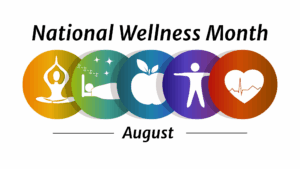
National Wellness Month
August 2026 (event times shown in PST)
National Wellness Month is a month-long observance founded in 2018 to promote sustainable self-care and stress-management habits through workplace and community wellness content. Health Net, CMHA British Columbia, East London NHS Foundation Trust, EHN Canada, Beyond Blue, and TED are contributing live wellness webinars, recorded webinar libraries, and on-demand talks covering financial wellness, resilience, sleep, and stress reduction.
Beyond Blue
Beyond Blue is an Australian national mental health and wellbeing organization providing information, tools, and support for anxiety, depression, and suicide prevention; it partners with the Sleep Health Foundation on public education about the sleep-mental health connection.
On-Demand Resources
How to Sleep Well and Improve Mental Health: A Beyond Blue Webinar
Type: Recorded Webinar
Duration: Approx. 45-60 minutes
A panel webinar, hosted during Sleep Health Foundation’s Sleep Health Week, covering the science of sleep, its link to mental health, and evidence-based strategies for better sleep, featuring physician Dr. Norman Swan and Sleep Health Foundation CEO Moira Junge. The recording remains publicly available on the Sleep Health Foundation’s website.
CMHA British Columbia
CMHA British Columbia is the provincial division of the Canadian Mental Health Association, delivering mental health programs, crisis response, and workplace training and wellness resources across British Columbia.
Virtual Events & Meetings
Rethinking Resilience: Lived Experience, Systems, and Practical Ways to Cope
A reflective, practical session exploring how resilience is shaped by lived experience, workplace systems, and available supports, presented by Ottawa-based speaker Alina Avram.
Time: Tue, 12:00-1:00 PM, PST
Date(s): Tuesday, August 18, 2026, and Tuesday, August 25, 2026 (repeat session)
Format: Virtual
Platform: Zoom — Register (Aug 18 session) · CMHA BC Events Calendar (Aug 25 session)
East London NHS Foundation Trust
East London NHS Foundation Trust delivers NHS mental health and community services across East London and Bedfordshire; its Bedfordshire Talking Therapies service offers free self-management support for common mental health difficulties.
On-Demand Resources
Wellbeing Webinar Library
Type: Video (pre-recorded, YouTube)
Duration: 16 videos, approximately 30 minutes each
A library of pre-recorded webinars teaching practical techniques for panic, sleep, burnout, loneliness, and other common wellbeing concerns, viewable anytime.
Access: https://www.elft.nhs.uk/bedfordshire-talking-therapies/wellbeing-webinars
EHN Canada
EHN Canada (Edgewood Health Network) operates a network of private addiction and mental health treatment centres across Canada and provides free public education through recorded webinars on mental health, trauma, and recovery.
On-Demand Resources
EHN Canada Webinar Library
Type: Recorded Webinar
Duration: Ongoing monthly library, approximately 1 hour per session
Monthly educational webinars led by clinicians and specialists covering mental health, trauma, and addiction-recovery topics, archived for on-demand viewing.
Access: https://www.edgewoodhealthnetwork.com/resources/webinars/
Health Net
Health Net, a Centene Corporation subsidiary serving members in California, Oregon, and Washington, offers a free monthly Wellness Webinar Series open to members and the public on topics spanning nutrition, financial wellness, and stress management.
Virtual Events & Meetings
Money Matters – Making the Most of What You Have
A live wellness webinar sharing tips for saving money, negotiating pay, and improving one’s relationship with money.
Time: Wed, 12:00-12:45 PM, PST
Date(s): Wednesday, August 19, 2026
Format: Virtual
Platform: Zoom — Register
On-Demand Resources
Move Outside, Feel Alive
Type: Recorded Webinar
Duration: 45:54
A recorded July 2026 wellness webinar on how movement and time outdoors can boost energy, mood, and overall wellbeing, with a companion PDF guide.
Access: https://www.healthnet.com/content/healthnet/en_us/health-and-wellness/events.html
TED
TED is a nonprofit devoted to spreading ideas through short, powerful talks from experts across science, health, and culture, including a growing library on stress, self-care, and wellbeing.
On-Demand Resources
How to Make Stress Your Friend
Type: Recorded Talk
Duration: 14:15
Psychologist Kelly McGonigal reframes stress as a potential positive force and introduces a simple, evidence-based way to reduce its harmful effects.
Access: https://www.ted.com/talks/kelly_mcgonigal_how_to_make_stress_your_friend
Self Care: What It Really Is
Type: Recorded Talk
Duration: 9:59
Susannah Winters unpacks common myths about self-care and reframes it as a sustainable daily practice rather than an occasional indulgence.
Access: https://www.ted.com/talks/susannah_winters_self_care_what_it_really_is
General & Cross-Cutting Resources
Crisis & Immediate Support
988 Suicide & Crisis Lifeline — https://988lifeline.org · Free, 24/7 call, text, or chat support for anyone experiencing a mental health crisis.
Disclaimer: This listing is shared for community information only. The offerings are organized and hosted by the listed organizations, not by PeerGalaxy. Details such as dates, times, availability, and access links are subject to change — please confirm with the relevant organization before attending or applying.

VETERANS YOGA PROJECT
Online Studio — Live Weekly Class Schedule — FREE
“Making science-based healing practices accessible to every Veteran.”
The Veterans Yoga Project (VYP) Online Studio offers live, instructor-led yoga and Mindful Resilience classes every day of the week — completely free. Classes are open to Veterans, service members, family members, caregivers, and community members. Sign up and receive a class access link by email one hour before each session begins. All classes are hosted via Wellness Living (Zoom). Register at the VYP Online Studio.
SUNDAY CLASSES
Yoga Basics for Women
with Toya
5:30 AM – 6:30 AM PT · 60 min · FREE · Register at VYP Online Studio
Power Yoga
with Cortez
8:00 AM – 9:00 AM PT · 60 min · FREE · Register at VYP Online Studio
Yoga for Recovery
with Brian
3:00 PM – 4:00 PM PT · 60 min · FREE · Register at VYP Online Studio
Yoga Nidra
with Angela
5:00 PM – 5:45 PM PT · 45 min · FREE · Register at VYP Online Studio
Yoga Nidra
with Sarah Jo
7:00 PM – 7:45 PM PT · 45 min · FREE · Register at VYP Online Studio
MONDAY CLASSES
Slow Stretch for TBI
with Christine
3:00 AM – 3:30 AM PT · 30 min · FREE · Register at VYP Online Studio
Breathwork + Gentle Yoga
with Isah
6:00 AM – 7:00 AM PT · 60 min · FREE · Register at VYP Online Studio
Guided Meditation
with Heidi
8:00 AM – 8:20 AM PT · 20 min · FREE · Register at VYP Online Studio
Power Yoga
with Adrian C
4:00 PM – 5:00 PM PT · 60 min · FREE · Register at VYP Online Studio
Yoga for Veteran Caregivers
with Becky Sanstead
5:30 PM – 6:30 PM PT · 60 min · FREE · Register at VYP Online Studio
Access link: Register at VYP Online Studio above
Yoga Nidra
with Terri S
6:00 PM – 6:45 PM PT · 45 min · FREE · Register at VYP Online Studio
Yoga Nidra (Holiday — Nov 27)
with Patricia H
8:00 PM – 8:30 PM PT · 30 min · FREE · Register at VYP Online Studio
Scheduled for Nov 27 only — verify availability for March
TUESDAY CLASSES
Guided Meditation
with Adrianne
3:30 AM – 3:50 AM PT · 20 min · FREE · Register at VYP Online Studio
Sunrise Flow
with Carrie
4:00 AM – 4:45 AM PT · 45 min · FREE · Register at VYP Online Studio
Breathwork + Gentle Yoga
with Mollie
6:00 AM – 7:00 AM PT · 60 min · FREE · Register at VYP Online Studio
[VERIFY: Instructor note states ‘Starting NOV’ — confirm active for March 2026]
Yoga for Stability and Strength
with Joan
7:15 AM – 8:00 AM PT · 45 min · FREE · Register at VYP Online Studio
Chair Yoga
with Tiffany
3:00 PM – 4:00 PM PT · 60 min · FREE · Register at VYP Online Studio
Slow Stretch
with Anne
5:00 PM – 5:45 PM PT · 45 min · FREE · Register at VYP Online Studio
Yoga Nidra
with Gail M
6:00 PM – 6:45 PM PT · 45 min · FREE · Register at VYP Online Studio
WEDNESDAY CLASSES
Active Yoga & Breathwork
with Brian
6:00 AM – 7:00 AM PT · 60 min · FREE · Register at VYP Online Studio
Somatic Mindfulness
with Adrian
9:00 AM – 9:30 AM PT · 30 min · FREE · Register at VYP Online Studio
Gentle Yoga for Back Care
with Gail PB
11:00 AM – 12:00 PM PT · 60 min · FREE · Register at VYP Online Studio
Power Yoga
with Jasmine
4:00 PM – 4:45 PM PT · 45 min · FREE · Register at VYP Online Studio
Yin Yoga
with Raeann
5:00 PM – 5:45 PM PT · 45 min · FREE · Register at VYP Online Studio
Yoga Nidra
with Priya
6:30 PM – 7:00 PM PT · 30 min · FREE · Register at VYP Online Studio
THURSDAY CLASSES
Breathwork + Gentle Yoga
with Karen
6:00 AM – 7:00 AM PT · 60 min · FREE · Register at VYP Online Studio
Wake Up Yoga!
with Brianna
4:00 AM – 4:45 AM PT · 45 min · FREE · Register at VYP Online Studio
Power Yoga
with Angela P.
8:00 AM – 9:00 AM PT · 60 min · FREE · Register at VYP Online Studio
Guided Meditation
with Simone
10:00 AM – 10:20 AM PT · 20 min · FREE · Register at VYP Online Studio
Energy to Ease: Yin and Yang Yoga
with Jessie
3:00 PM – 4:00 PM PT · 60 min · FREE · Register at VYP Online Studio
Active Beginner
with Julie
4:00 PM – 4:45 PM PT · 45 min · FREE · Register at VYP Online Studio
Slow Stretch
with Mollie
5:00 PM – 5:45 PM PT · 45 min · FREE · Register at VYP Online Studio
Yoga Nidra
with Karen
6:00 PM – 6:45 PM PT · 45 min · FREE · Register at VYP Online Studio
FRIDAY CLASSES
Reset Fridays with the Fundamentals
with Krista
4:00 AM – 5:00 AM PT · 60 min · FREE · Register at VYP Online Studio
Breathwork + Gentle Yoga
with Anne
6:00 AM – 7:00 AM PT · 60 min · FREE · Register at VYP Online Studio
Chair Yoga for Every Body
with Deb
11:00 AM – 12:00 PM PT · 60 min · FREE · Register at VYP Online Studio
Gentle Yoga
with Monique
3:00 PM – 4:00 PM PT · 60 min · FREE · Register at VYP Online Studio
Slow Stretch
with Kathy
5:15 PM – 5:45 PM PT · 30 min · FREE · Register at VYP Online Studio
Yoga Nidra
with Jasmin
6:30 PM – 7:15 PM PT · 45 min · FREE · Register at VYP Online Studio
SATURDAY CLASSES
Chair Yoga: Core & Balance
with Val
8:00 AM – 9:00 AM PT · 60 min · FREE · Register at VYP Online Studio
Yoga Nidra
with Clarissa
5:00 PM – 5:45 PM PT · 45 min · FREE · Register at VYP Online Studio
Rest and Restore Yoga
with Adrian
7:00 PM – 8:00 PM PT · 60 min · FREE · Register at VYP Online Studio
ADDITIONAL RESOURCES
Veterans Yoga Project — Main Website — Program information, mission, and community
VYP Online Studio Schedule — Full live schedule and class registration
VYP YouTube Channel — Free on-demand yoga and meditation videos
VYP Instructor Training — Trauma-informed yoga teacher training for those who serve Veterans
ABOUT VETERANS’ YOGA PROJECT
Veterans Yoga Project (VYP) is a nonprofit organization founded to make evidence-based yoga and Mindful Resilience practices accessible to Veterans, service members, family members, and healthcare workers — free of charge. VYP’s five-tool Mindful Resilience curriculum — Breathing, Meditation, Mindful Movement, Guided Rest, and Gratitude — is grounded in trauma-informed research and delivered daily through the Online Studio via Wellness Living (Zoom). Veterans consistently report reductions of 70% or more in pain and stress with each yoga encounter, as documented in VYP’s 2025 Subjective Pain and Distress Scores Analysis.
DISCLAIMER: All classes are free and confidential. Information is shared solely as a courtesy and is not a substitute for legal advice, professional treatment, or emergency services. If a person is in immediate danger, call 911 or contact local law enforcement. For mental health emergencies, call or text 988 (Suicide & Crisis Lifeline).

POWER ON WITH LIMB LOSS
Marion County Peer Support Meeting
“Empowering those affected by limb loss through community, peer support, and shared lived experience.”
MARION COUNTY SUPPORT MEETING
Connect with others who understand life with limb loss or limb difference at our monthly Marion County gathering, hosted at Salem Health. This peer-led meeting offers a welcoming space for individuals and family members to share experiences, ask questions, and find community.
Meets the 2nd Wednesday of each month · 6:00 PM PT
Add to Calendar — Power On With Limb Loss
Joining Virtually via Zoom
If you are planning to join virtually and it is your first time, please plan on joining 10–15 minutes early so we can make sure your audio and video are working properly.
Save the Zoom link to your bookmarks to make it easier to find for future meetings.
Zoom Meeting Number: #898 711 8613 · Launch Zoom
A Friendly Reminder About Meeting Guidelines
Please respect everyone’s time by arriving on time. Plan to arrive about 10 minutes early to allow time for parking and getting to the room.
Each meeting begins with short introductions. First-time attendees are welcome to take a little extra time.
A Q&A session follows presentations. Please raise a limb or use a reaction button if you have a question or a contribution. Guest speakers or the meeting facilitator will address questions, and insightful input from participants is always welcome. If you have a private or lengthy topic to raise, reach out to arrange a smaller group meeting.
Additional Resources
Power On With Limb Loss — Main Website — Resources, meeting schedule, and peer support information
About Power On With Limb Loss
Power On With Limb Loss is a peer-led organization dedicated to supporting individuals and families affected by limb loss and limb difference across Oregon. Led by Paula Free, the organization brings together people with lived experience to share resources, build community, and foster resilience through monthly in-person and virtual support meetings.
Let’s Connect
The Power On Social Hour and Support Meetings serve our community in many ways — including those of us with health concerns that require staying home. If you are not able to join the monthly gathering, consider reaching out to set up a call or a peer visit.
DISCLAIMER: Information is solely shared as a courtesy. Not a substitute for legal advice, professional treatment, or emergency services. If a child or person is in immediate danger, call 911 or contact local law enforcement. For mental health or substance use emergencies, call or text 988 (Suicide & Crisis Lifeline). Seek guidance from a qualified medical or mental health professional for personalized care.
National Wellness Month
August 2026 (event times shown in PST)
National Wellness Month is a month-long observance founded in 2018 to promote sustainable self-care and stress-management habits through workplace and community wellness content. Health Net, CMHA British Columbia, East London NHS Foundation Trust, EHN Canada, Beyond Blue, and TED are contributing live wellness webinars, recorded webinar libraries, and on-demand talks covering financial wellness, resilience, sleep, and stress reduction.
Beyond Blue
Beyond Blue is an Australian national mental health and wellbeing organization providing information, tools, and support for anxiety, depression, and suicide prevention; it partners with the Sleep Health Foundation on public education about the sleep-mental health connection.
On-Demand Resources
How to Sleep Well and Improve Mental Health: A Beyond Blue Webinar
Type: Recorded Webinar
Duration: Approx. 45-60 minutes
A panel webinar, hosted during Sleep Health Foundation’s Sleep Health Week, covering the science of sleep, its link to mental health, and evidence-based strategies for better sleep, featuring physician Dr. Norman Swan and Sleep Health Foundation CEO Moira Junge. The recording remains publicly available on the Sleep Health Foundation’s website.
CMHA British Columbia
CMHA British Columbia is the provincial division of the Canadian Mental Health Association, delivering mental health programs, crisis response, and workplace training and wellness resources across British Columbia.
Virtual Events & Meetings
Rethinking Resilience: Lived Experience, Systems, and Practical Ways to Cope
A reflective, practical session exploring how resilience is shaped by lived experience, workplace systems, and available supports, presented by Ottawa-based speaker Alina Avram.
Time: Tue, 12:00-1:00 PM, PST
Date(s): Tuesday, August 18, 2026, and Tuesday, August 25, 2026 (repeat session)
Format: Virtual
Platform: Zoom — Register (Aug 18 session) · CMHA BC Events Calendar (Aug 25 session)
East London NHS Foundation Trust
East London NHS Foundation Trust delivers NHS mental health and community services across East London and Bedfordshire; its Bedfordshire Talking Therapies service offers free self-management support for common mental health difficulties.
On-Demand Resources
Wellbeing Webinar Library
Type: Video (pre-recorded, YouTube)
Duration: 16 videos, approximately 30 minutes each
A library of pre-recorded webinars teaching practical techniques for panic, sleep, burnout, loneliness, and other common wellbeing concerns, viewable anytime.
Access: https://www.elft.nhs.uk/bedfordshire-talking-therapies/wellbeing-webinars
EHN Canada
EHN Canada (Edgewood Health Network) operates a network of private addiction and mental health treatment centres across Canada and provides free public education through recorded webinars on mental health, trauma, and recovery.
On-Demand Resources
EHN Canada Webinar Library
Type: Recorded Webinar
Duration: Ongoing monthly library, approximately 1 hour per session
Monthly educational webinars led by clinicians and specialists covering mental health, trauma, and addiction-recovery topics, archived for on-demand viewing.
Access: https://www.edgewoodhealthnetwork.com/resources/webinars/
Health Net
Health Net, a Centene Corporation subsidiary serving members in California, Oregon, and Washington, offers a free monthly Wellness Webinar Series open to members and the public on topics spanning nutrition, financial wellness, and stress management.
Virtual Events & Meetings
Money Matters – Making the Most of What You Have
A live wellness webinar sharing tips for saving money, negotiating pay, and improving one’s relationship with money.
Time: Wed, 12:00-12:45 PM, PST
Date(s): Wednesday, August 19, 2026
Format: Virtual
Platform: Zoom — Register
On-Demand Resources
Move Outside, Feel Alive
Type: Recorded Webinar
Duration: 45:54
A recorded July 2026 wellness webinar on how movement and time outdoors can boost energy, mood, and overall wellbeing, with a companion PDF guide.
Access: https://www.healthnet.com/content/healthnet/en_us/health-and-wellness/events.html
TED
TED is a nonprofit devoted to spreading ideas through short, powerful talks from experts across science, health, and culture, including a growing library on stress, self-care, and wellbeing.
On-Demand Resources
How to Make Stress Your Friend
Type: Recorded Talk
Duration: 14:15
Psychologist Kelly McGonigal reframes stress as a potential positive force and introduces a simple, evidence-based way to reduce its harmful effects.
Access: https://www.ted.com/talks/kelly_mcgonigal_how_to_make_stress_your_friend
Self Care: What It Really Is
Type: Recorded Talk
Duration: 9:59
Susannah Winters unpacks common myths about self-care and reframes it as a sustainable daily practice rather than an occasional indulgence.
Access: https://www.ted.com/talks/susannah_winters_self_care_what_it_really_is
General & Cross-Cutting Resources
Crisis & Immediate Support
988 Suicide & Crisis Lifeline — https://988lifeline.org · Free, 24/7 call, text, or chat support for anyone experiencing a mental health crisis.
Disclaimer: This listing is shared for community information only. The offerings are organized and hosted by the listed organizations, not by PeerGalaxy. Details such as dates, times, availability, and access links are subject to change — please confirm with the relevant organization before attending or applying.
VETERANS YOGA PROJECT
Online Studio — Live Weekly Class Schedule — FREE
“Making science-based healing practices accessible to every Veteran.”
The Veterans Yoga Project (VYP) Online Studio offers live, instructor-led yoga and Mindful Resilience classes every day of the week — completely free. Classes are open to Veterans, service members, family members, caregivers, and community members. Sign up and receive a class access link by email one hour before each session begins. All classes are hosted via Wellness Living (Zoom). Register at the VYP Online Studio.
SUNDAY CLASSES
Yoga Basics for Women
with Toya
5:30 AM – 6:30 AM PT · 60 min · FREE · Register at VYP Online Studio
Power Yoga
with Cortez
8:00 AM – 9:00 AM PT · 60 min · FREE · Register at VYP Online Studio
Yoga for Recovery
with Brian
3:00 PM – 4:00 PM PT · 60 min · FREE · Register at VYP Online Studio
Yoga Nidra
with Angela
5:00 PM – 5:45 PM PT · 45 min · FREE · Register at VYP Online Studio
Yoga Nidra
with Sarah Jo
7:00 PM – 7:45 PM PT · 45 min · FREE · Register at VYP Online Studio
MONDAY CLASSES
Slow Stretch for TBI
with Christine
3:00 AM – 3:30 AM PT · 30 min · FREE · Register at VYP Online Studio
Breathwork + Gentle Yoga
with Isah
6:00 AM – 7:00 AM PT · 60 min · FREE · Register at VYP Online Studio
Guided Meditation
with Heidi
8:00 AM – 8:20 AM PT · 20 min · FREE · Register at VYP Online Studio
Power Yoga
with Adrian C
4:00 PM – 5:00 PM PT · 60 min · FREE · Register at VYP Online Studio
Yoga for Veteran Caregivers
with Becky Sanstead
5:30 PM – 6:30 PM PT · 60 min · FREE · Register at VYP Online Studio
Access link: Register at VYP Online Studio above
Yoga Nidra
with Terri S
6:00 PM – 6:45 PM PT · 45 min · FREE · Register at VYP Online Studio
Yoga Nidra (Holiday — Nov 27)
with Patricia H
8:00 PM – 8:30 PM PT · 30 min · FREE · Register at VYP Online Studio
Scheduled for Nov 27 only — verify availability for March
TUESDAY CLASSES
Guided Meditation
with Adrianne
3:30 AM – 3:50 AM PT · 20 min · FREE · Register at VYP Online Studio
Sunrise Flow
with Carrie
4:00 AM – 4:45 AM PT · 45 min · FREE · Register at VYP Online Studio
Breathwork + Gentle Yoga
with Mollie
6:00 AM – 7:00 AM PT · 60 min · FREE · Register at VYP Online Studio
[VERIFY: Instructor note states ‘Starting NOV’ — confirm active for March 2026]
Yoga for Stability and Strength
with Joan
7:15 AM – 8:00 AM PT · 45 min · FREE · Register at VYP Online Studio
Chair Yoga
with Tiffany
3:00 PM – 4:00 PM PT · 60 min · FREE · Register at VYP Online Studio
Slow Stretch
with Anne
5:00 PM – 5:45 PM PT · 45 min · FREE · Register at VYP Online Studio
Yoga Nidra
with Gail M
6:00 PM – 6:45 PM PT · 45 min · FREE · Register at VYP Online Studio
WEDNESDAY CLASSES
Active Yoga & Breathwork
with Brian
6:00 AM – 7:00 AM PT · 60 min · FREE · Register at VYP Online Studio
Somatic Mindfulness
with Adrian
9:00 AM – 9:30 AM PT · 30 min · FREE · Register at VYP Online Studio
Gentle Yoga for Back Care
with Gail PB
11:00 AM – 12:00 PM PT · 60 min · FREE · Register at VYP Online Studio
Power Yoga
with Jasmine
4:00 PM – 4:45 PM PT · 45 min · FREE · Register at VYP Online Studio
Yin Yoga
with Raeann
5:00 PM – 5:45 PM PT · 45 min · FREE · Register at VYP Online Studio
Yoga Nidra
with Priya
6:30 PM – 7:00 PM PT · 30 min · FREE · Register at VYP Online Studio
THURSDAY CLASSES
Breathwork + Gentle Yoga
with Karen
6:00 AM – 7:00 AM PT · 60 min · FREE · Register at VYP Online Studio
Wake Up Yoga!
with Brianna
4:00 AM – 4:45 AM PT · 45 min · FREE · Register at VYP Online Studio
Power Yoga
with Angela P.
8:00 AM – 9:00 AM PT · 60 min · FREE · Register at VYP Online Studio
Guided Meditation
with Simone
10:00 AM – 10:20 AM PT · 20 min · FREE · Register at VYP Online Studio
Energy to Ease: Yin and Yang Yoga
with Jessie
3:00 PM – 4:00 PM PT · 60 min · FREE · Register at VYP Online Studio
Active Beginner
with Julie
4:00 PM – 4:45 PM PT · 45 min · FREE · Register at VYP Online Studio
Slow Stretch
with Mollie
5:00 PM – 5:45 PM PT · 45 min · FREE · Register at VYP Online Studio
Yoga Nidra
with Karen
6:00 PM – 6:45 PM PT · 45 min · FREE · Register at VYP Online Studio
FRIDAY CLASSES
Reset Fridays with the Fundamentals
with Krista
4:00 AM – 5:00 AM PT · 60 min · FREE · Register at VYP Online Studio
Breathwork + Gentle Yoga
with Anne
6:00 AM – 7:00 AM PT · 60 min · FREE · Register at VYP Online Studio
Chair Yoga for Every Body
with Deb
11:00 AM – 12:00 PM PT · 60 min · FREE · Register at VYP Online Studio
Gentle Yoga
with Monique
3:00 PM – 4:00 PM PT · 60 min · FREE · Register at VYP Online Studio
Slow Stretch
with Kathy
5:15 PM – 5:45 PM PT · 30 min · FREE · Register at VYP Online Studio
Yoga Nidra
with Jasmin
6:30 PM – 7:15 PM PT · 45 min · FREE · Register at VYP Online Studio
SATURDAY CLASSES
Chair Yoga: Core & Balance
with Val
8:00 AM – 9:00 AM PT · 60 min · FREE · Register at VYP Online Studio
Yoga Nidra
with Clarissa
5:00 PM – 5:45 PM PT · 45 min · FREE · Register at VYP Online Studio
Rest and Restore Yoga
with Adrian
7:00 PM – 8:00 PM PT · 60 min · FREE · Register at VYP Online Studio
ADDITIONAL RESOURCES
Veterans Yoga Project — Main Website — Program information, mission, and community
VYP Online Studio Schedule — Full live schedule and class registration
VYP YouTube Channel — Free on-demand yoga and meditation videos
VYP Instructor Training — Trauma-informed yoga teacher training for those who serve Veterans
ABOUT VETERANS’ YOGA PROJECT
Veterans Yoga Project (VYP) is a nonprofit organization founded to make evidence-based yoga and Mindful Resilience practices accessible to Veterans, service members, family members, and healthcare workers — free of charge. VYP’s five-tool Mindful Resilience curriculum — Breathing, Meditation, Mindful Movement, Guided Rest, and Gratitude — is grounded in trauma-informed research and delivered daily through the Online Studio via Wellness Living (Zoom). Veterans consistently report reductions of 70% or more in pain and stress with each yoga encounter, as documented in VYP’s 2025 Subjective Pain and Distress Scores Analysis.
DISCLAIMER: All classes are free and confidential. Information is shared solely as a courtesy and is not a substitute for legal advice, professional treatment, or emergency services. If a person is in immediate danger, call 911 or contact local law enforcement. For mental health emergencies, call or text 988 (Suicide & Crisis Lifeline).

National Wellness Month
August 2026 (event times shown in PST)
National Wellness Month is a month-long observance founded in 2018 to promote sustainable self-care and stress-management habits through workplace and community wellness content. Health Net, CMHA British Columbia, East London NHS Foundation Trust, EHN Canada, Beyond Blue, and TED are contributing live wellness webinars, recorded webinar libraries, and on-demand talks covering financial wellness, resilience, sleep, and stress reduction.
Beyond Blue
Beyond Blue is an Australian national mental health and wellbeing organization providing information, tools, and support for anxiety, depression, and suicide prevention; it partners with the Sleep Health Foundation on public education about the sleep-mental health connection.
On-Demand Resources
How to Sleep Well and Improve Mental Health: A Beyond Blue Webinar
Type: Recorded Webinar
Duration: Approx. 45-60 minutes
A panel webinar, hosted during Sleep Health Foundation’s Sleep Health Week, covering the science of sleep, its link to mental health, and evidence-based strategies for better sleep, featuring physician Dr. Norman Swan and Sleep Health Foundation CEO Moira Junge. The recording remains publicly available on the Sleep Health Foundation’s website.
CMHA British Columbia
CMHA British Columbia is the provincial division of the Canadian Mental Health Association, delivering mental health programs, crisis response, and workplace training and wellness resources across British Columbia.
Virtual Events & Meetings
Rethinking Resilience: Lived Experience, Systems, and Practical Ways to Cope
A reflective, practical session exploring how resilience is shaped by lived experience, workplace systems, and available supports, presented by Ottawa-based speaker Alina Avram.
Time: Tue, 12:00-1:00 PM, PST
Date(s): Tuesday, August 18, 2026, and Tuesday, August 25, 2026 (repeat session)
Format: Virtual
Platform: Zoom — Register (Aug 18 session) · CMHA BC Events Calendar (Aug 25 session)
East London NHS Foundation Trust
East London NHS Foundation Trust delivers NHS mental health and community services across East London and Bedfordshire; its Bedfordshire Talking Therapies service offers free self-management support for common mental health difficulties.
On-Demand Resources
Wellbeing Webinar Library
Type: Video (pre-recorded, YouTube)
Duration: 16 videos, approximately 30 minutes each
A library of pre-recorded webinars teaching practical techniques for panic, sleep, burnout, loneliness, and other common wellbeing concerns, viewable anytime.
Access: https://www.elft.nhs.uk/bedfordshire-talking-therapies/wellbeing-webinars
EHN Canada
EHN Canada (Edgewood Health Network) operates a network of private addiction and mental health treatment centres across Canada and provides free public education through recorded webinars on mental health, trauma, and recovery.
On-Demand Resources
EHN Canada Webinar Library
Type: Recorded Webinar
Duration: Ongoing monthly library, approximately 1 hour per session
Monthly educational webinars led by clinicians and specialists covering mental health, trauma, and addiction-recovery topics, archived for on-demand viewing.
Access: https://www.edgewoodhealthnetwork.com/resources/webinars/
Health Net
Health Net, a Centene Corporation subsidiary serving members in California, Oregon, and Washington, offers a free monthly Wellness Webinar Series open to members and the public on topics spanning nutrition, financial wellness, and stress management.
Virtual Events & Meetings
Money Matters – Making the Most of What You Have
A live wellness webinar sharing tips for saving money, negotiating pay, and improving one’s relationship with money.
Time: Wed, 12:00-12:45 PM, PST
Date(s): Wednesday, August 19, 2026
Format: Virtual
Platform: Zoom — Register
On-Demand Resources
Move Outside, Feel Alive
Type: Recorded Webinar
Duration: 45:54
A recorded July 2026 wellness webinar on how movement and time outdoors can boost energy, mood, and overall wellbeing, with a companion PDF guide.
Access: https://www.healthnet.com/content/healthnet/en_us/health-and-wellness/events.html
TED
TED is a nonprofit devoted to spreading ideas through short, powerful talks from experts across science, health, and culture, including a growing library on stress, self-care, and wellbeing.
On-Demand Resources
How to Make Stress Your Friend
Type: Recorded Talk
Duration: 14:15
Psychologist Kelly McGonigal reframes stress as a potential positive force and introduces a simple, evidence-based way to reduce its harmful effects.
Access: https://www.ted.com/talks/kelly_mcgonigal_how_to_make_stress_your_friend
Self Care: What It Really Is
Type: Recorded Talk
Duration: 9:59
Susannah Winters unpacks common myths about self-care and reframes it as a sustainable daily practice rather than an occasional indulgence.
Access: https://www.ted.com/talks/susannah_winters_self_care_what_it_really_is
General & Cross-Cutting Resources
Crisis & Immediate Support
988 Suicide & Crisis Lifeline — https://988lifeline.org · Free, 24/7 call, text, or chat support for anyone experiencing a mental health crisis.
Disclaimer: This listing is shared for community information only. The offerings are organized and hosted by the listed organizations, not by PeerGalaxy. Details such as dates, times, availability, and access links are subject to change — please confirm with the relevant organization before attending or applying.
VETERANS YOGA PROJECT
Online Studio — Live Weekly Class Schedule — FREE
“Making science-based healing practices accessible to every Veteran.”
The Veterans Yoga Project (VYP) Online Studio offers live, instructor-led yoga and Mindful Resilience classes every day of the week — completely free. Classes are open to Veterans, service members, family members, caregivers, and community members. Sign up and receive a class access link by email one hour before each session begins. All classes are hosted via Wellness Living (Zoom). Register at the VYP Online Studio.
SUNDAY CLASSES
Yoga Basics for Women
with Toya
5:30 AM – 6:30 AM PT · 60 min · FREE · Register at VYP Online Studio
Power Yoga
with Cortez
8:00 AM – 9:00 AM PT · 60 min · FREE · Register at VYP Online Studio
Yoga for Recovery
with Brian
3:00 PM – 4:00 PM PT · 60 min · FREE · Register at VYP Online Studio
Yoga Nidra
with Angela
5:00 PM – 5:45 PM PT · 45 min · FREE · Register at VYP Online Studio
Yoga Nidra
with Sarah Jo
7:00 PM – 7:45 PM PT · 45 min · FREE · Register at VYP Online Studio
MONDAY CLASSES
Slow Stretch for TBI
with Christine
3:00 AM – 3:30 AM PT · 30 min · FREE · Register at VYP Online Studio
Breathwork + Gentle Yoga
with Isah
6:00 AM – 7:00 AM PT · 60 min · FREE · Register at VYP Online Studio
Guided Meditation
with Heidi
8:00 AM – 8:20 AM PT · 20 min · FREE · Register at VYP Online Studio
Power Yoga
with Adrian C
4:00 PM – 5:00 PM PT · 60 min · FREE · Register at VYP Online Studio
Yoga for Veteran Caregivers
with Becky Sanstead
5:30 PM – 6:30 PM PT · 60 min · FREE · Register at VYP Online Studio
Access link: Register at VYP Online Studio above
Yoga Nidra
with Terri S
6:00 PM – 6:45 PM PT · 45 min · FREE · Register at VYP Online Studio
Yoga Nidra (Holiday — Nov 27)
with Patricia H
8:00 PM – 8:30 PM PT · 30 min · FREE · Register at VYP Online Studio
Scheduled for Nov 27 only — verify availability for March
TUESDAY CLASSES
Guided Meditation
with Adrianne
3:30 AM – 3:50 AM PT · 20 min · FREE · Register at VYP Online Studio
Sunrise Flow
with Carrie
4:00 AM – 4:45 AM PT · 45 min · FREE · Register at VYP Online Studio
Breathwork + Gentle Yoga
with Mollie
6:00 AM – 7:00 AM PT · 60 min · FREE · Register at VYP Online Studio
[VERIFY: Instructor note states ‘Starting NOV’ — confirm active for March 2026]
Yoga for Stability and Strength
with Joan
7:15 AM – 8:00 AM PT · 45 min · FREE · Register at VYP Online Studio
Chair Yoga
with Tiffany
3:00 PM – 4:00 PM PT · 60 min · FREE · Register at VYP Online Studio
Slow Stretch
with Anne
5:00 PM – 5:45 PM PT · 45 min · FREE · Register at VYP Online Studio
Yoga Nidra
with Gail M
6:00 PM – 6:45 PM PT · 45 min · FREE · Register at VYP Online Studio
WEDNESDAY CLASSES
Active Yoga & Breathwork
with Brian
6:00 AM – 7:00 AM PT · 60 min · FREE · Register at VYP Online Studio
Somatic Mindfulness
with Adrian
9:00 AM – 9:30 AM PT · 30 min · FREE · Register at VYP Online Studio
Gentle Yoga for Back Care
with Gail PB
11:00 AM – 12:00 PM PT · 60 min · FREE · Register at VYP Online Studio
Power Yoga
with Jasmine
4:00 PM – 4:45 PM PT · 45 min · FREE · Register at VYP Online Studio
Yin Yoga
with Raeann
5:00 PM – 5:45 PM PT · 45 min · FREE · Register at VYP Online Studio
Yoga Nidra
with Priya
6:30 PM – 7:00 PM PT · 30 min · FREE · Register at VYP Online Studio
THURSDAY CLASSES
Breathwork + Gentle Yoga
with Karen
6:00 AM – 7:00 AM PT · 60 min · FREE · Register at VYP Online Studio
Wake Up Yoga!
with Brianna
4:00 AM – 4:45 AM PT · 45 min · FREE · Register at VYP Online Studio
Power Yoga
with Angela P.
8:00 AM – 9:00 AM PT · 60 min · FREE · Register at VYP Online Studio
Guided Meditation
with Simone
10:00 AM – 10:20 AM PT · 20 min · FREE · Register at VYP Online Studio
Energy to Ease: Yin and Yang Yoga
with Jessie
3:00 PM – 4:00 PM PT · 60 min · FREE · Register at VYP Online Studio
Active Beginner
with Julie
4:00 PM – 4:45 PM PT · 45 min · FREE · Register at VYP Online Studio
Slow Stretch
with Mollie
5:00 PM – 5:45 PM PT · 45 min · FREE · Register at VYP Online Studio
Yoga Nidra
with Karen
6:00 PM – 6:45 PM PT · 45 min · FREE · Register at VYP Online Studio
FRIDAY CLASSES
Reset Fridays with the Fundamentals
with Krista
4:00 AM – 5:00 AM PT · 60 min · FREE · Register at VYP Online Studio
Breathwork + Gentle Yoga
with Anne
6:00 AM – 7:00 AM PT · 60 min · FREE · Register at VYP Online Studio
Chair Yoga for Every Body
with Deb
11:00 AM – 12:00 PM PT · 60 min · FREE · Register at VYP Online Studio
Gentle Yoga
with Monique
3:00 PM – 4:00 PM PT · 60 min · FREE · Register at VYP Online Studio
Slow Stretch
with Kathy
5:15 PM – 5:45 PM PT · 30 min · FREE · Register at VYP Online Studio
Yoga Nidra
with Jasmin
6:30 PM – 7:15 PM PT · 45 min · FREE · Register at VYP Online Studio
SATURDAY CLASSES
Chair Yoga: Core & Balance
with Val
8:00 AM – 9:00 AM PT · 60 min · FREE · Register at VYP Online Studio
Yoga Nidra
with Clarissa
5:00 PM – 5:45 PM PT · 45 min · FREE · Register at VYP Online Studio
Rest and Restore Yoga
with Adrian
7:00 PM – 8:00 PM PT · 60 min · FREE · Register at VYP Online Studio
ADDITIONAL RESOURCES
Veterans Yoga Project — Main Website — Program information, mission, and community
VYP Online Studio Schedule — Full live schedule and class registration
VYP YouTube Channel — Free on-demand yoga and meditation videos
VYP Instructor Training — Trauma-informed yoga teacher training for those who serve Veterans
ABOUT VETERANS’ YOGA PROJECT
Veterans Yoga Project (VYP) is a nonprofit organization founded to make evidence-based yoga and Mindful Resilience practices accessible to Veterans, service members, family members, and healthcare workers — free of charge. VYP’s five-tool Mindful Resilience curriculum — Breathing, Meditation, Mindful Movement, Guided Rest, and Gratitude — is grounded in trauma-informed research and delivered daily through the Online Studio via Wellness Living (Zoom). Veterans consistently report reductions of 70% or more in pain and stress with each yoga encounter, as documented in VYP’s 2025 Subjective Pain and Distress Scores Analysis.
DISCLAIMER: All classes are free and confidential. Information is shared solely as a courtesy and is not a substitute for legal advice, professional treatment, or emergency services. If a person is in immediate danger, call 911 or contact local law enforcement. For mental health emergencies, call or text 988 (Suicide & Crisis Lifeline).
National Wellness Month
August 2026 (event times shown in PST)
National Wellness Month is a month-long observance founded in 2018 to promote sustainable self-care and stress-management habits through workplace and community wellness content. Health Net, CMHA British Columbia, East London NHS Foundation Trust, EHN Canada, Beyond Blue, and TED are contributing live wellness webinars, recorded webinar libraries, and on-demand talks covering financial wellness, resilience, sleep, and stress reduction.
Beyond Blue
Beyond Blue is an Australian national mental health and wellbeing organization providing information, tools, and support for anxiety, depression, and suicide prevention; it partners with the Sleep Health Foundation on public education about the sleep-mental health connection.
On-Demand Resources
How to Sleep Well and Improve Mental Health: A Beyond Blue Webinar
Type: Recorded Webinar
Duration: Approx. 45-60 minutes
A panel webinar, hosted during Sleep Health Foundation’s Sleep Health Week, covering the science of sleep, its link to mental health, and evidence-based strategies for better sleep, featuring physician Dr. Norman Swan and Sleep Health Foundation CEO Moira Junge. The recording remains publicly available on the Sleep Health Foundation’s website.
CMHA British Columbia
CMHA British Columbia is the provincial division of the Canadian Mental Health Association, delivering mental health programs, crisis response, and workplace training and wellness resources across British Columbia.
Virtual Events & Meetings
Rethinking Resilience: Lived Experience, Systems, and Practical Ways to Cope
A reflective, practical session exploring how resilience is shaped by lived experience, workplace systems, and available supports, presented by Ottawa-based speaker Alina Avram.
Time: Tue, 12:00-1:00 PM, PST
Date(s): Tuesday, August 18, 2026, and Tuesday, August 25, 2026 (repeat session)
Format: Virtual
Platform: Zoom — Register (Aug 18 session) · CMHA BC Events Calendar (Aug 25 session)
East London NHS Foundation Trust
East London NHS Foundation Trust delivers NHS mental health and community services across East London and Bedfordshire; its Bedfordshire Talking Therapies service offers free self-management support for common mental health difficulties.
On-Demand Resources
Wellbeing Webinar Library
Type: Video (pre-recorded, YouTube)
Duration: 16 videos, approximately 30 minutes each
A library of pre-recorded webinars teaching practical techniques for panic, sleep, burnout, loneliness, and other common wellbeing concerns, viewable anytime.
Access: https://www.elft.nhs.uk/bedfordshire-talking-therapies/wellbeing-webinars
EHN Canada
EHN Canada (Edgewood Health Network) operates a network of private addiction and mental health treatment centres across Canada and provides free public education through recorded webinars on mental health, trauma, and recovery.
On-Demand Resources
EHN Canada Webinar Library
Type: Recorded Webinar
Duration: Ongoing monthly library, approximately 1 hour per session
Monthly educational webinars led by clinicians and specialists covering mental health, trauma, and addiction-recovery topics, archived for on-demand viewing.
Access: https://www.edgewoodhealthnetwork.com/resources/webinars/
Health Net
Health Net, a Centene Corporation subsidiary serving members in California, Oregon, and Washington, offers a free monthly Wellness Webinar Series open to members and the public on topics spanning nutrition, financial wellness, and stress management.
Virtual Events & Meetings
Money Matters – Making the Most of What You Have
A live wellness webinar sharing tips for saving money, negotiating pay, and improving one’s relationship with money.
Time: Wed, 12:00-12:45 PM, PST
Date(s): Wednesday, August 19, 2026
Format: Virtual
Platform: Zoom — Register
On-Demand Resources
Move Outside, Feel Alive
Type: Recorded Webinar
Duration: 45:54
A recorded July 2026 wellness webinar on how movement and time outdoors can boost energy, mood, and overall wellbeing, with a companion PDF guide.
Access: https://www.healthnet.com/content/healthnet/en_us/health-and-wellness/events.html
TED
TED is a nonprofit devoted to spreading ideas through short, powerful talks from experts across science, health, and culture, including a growing library on stress, self-care, and wellbeing.
On-Demand Resources
How to Make Stress Your Friend
Type: Recorded Talk
Duration: 14:15
Psychologist Kelly McGonigal reframes stress as a potential positive force and introduces a simple, evidence-based way to reduce its harmful effects.
Access: https://www.ted.com/talks/kelly_mcgonigal_how_to_make_stress_your_friend
Self Care: What It Really Is
Type: Recorded Talk
Duration: 9:59
Susannah Winters unpacks common myths about self-care and reframes it as a sustainable daily practice rather than an occasional indulgence.
Access: https://www.ted.com/talks/susannah_winters_self_care_what_it_really_is
General & Cross-Cutting Resources
Crisis & Immediate Support
988 Suicide & Crisis Lifeline — https://988lifeline.org · Free, 24/7 call, text, or chat support for anyone experiencing a mental health crisis.
Disclaimer: This listing is shared for community information only. The offerings are organized and hosted by the listed organizations, not by PeerGalaxy. Details such as dates, times, availability, and access links are subject to change — please confirm with the relevant organization before attending or applying.
VETERANS YOGA PROJECT
Online Studio — Live Weekly Class Schedule — FREE
“Making science-based healing practices accessible to every Veteran.”
The Veterans Yoga Project (VYP) Online Studio offers live, instructor-led yoga and Mindful Resilience classes every day of the week — completely free. Classes are open to Veterans, service members, family members, caregivers, and community members. Sign up and receive a class access link by email one hour before each session begins. All classes are hosted via Wellness Living (Zoom). Register at the VYP Online Studio.
SUNDAY CLASSES
Yoga Basics for Women
with Toya
5:30 AM – 6:30 AM PT · 60 min · FREE · Register at VYP Online Studio
Power Yoga
with Cortez
8:00 AM – 9:00 AM PT · 60 min · FREE · Register at VYP Online Studio
Yoga for Recovery
with Brian
3:00 PM – 4:00 PM PT · 60 min · FREE · Register at VYP Online Studio
Yoga Nidra
with Angela
5:00 PM – 5:45 PM PT · 45 min · FREE · Register at VYP Online Studio
Yoga Nidra
with Sarah Jo
7:00 PM – 7:45 PM PT · 45 min · FREE · Register at VYP Online Studio
MONDAY CLASSES
Slow Stretch for TBI
with Christine
3:00 AM – 3:30 AM PT · 30 min · FREE · Register at VYP Online Studio
Breathwork + Gentle Yoga
with Isah
6:00 AM – 7:00 AM PT · 60 min · FREE · Register at VYP Online Studio
Guided Meditation
with Heidi
8:00 AM – 8:20 AM PT · 20 min · FREE · Register at VYP Online Studio
Power Yoga
with Adrian C
4:00 PM – 5:00 PM PT · 60 min · FREE · Register at VYP Online Studio
Yoga for Veteran Caregivers
with Becky Sanstead
5:30 PM – 6:30 PM PT · 60 min · FREE · Register at VYP Online Studio
Access link: Register at VYP Online Studio above
Yoga Nidra
with Terri S
6:00 PM – 6:45 PM PT · 45 min · FREE · Register at VYP Online Studio
Yoga Nidra (Holiday — Nov 27)
with Patricia H
8:00 PM – 8:30 PM PT · 30 min · FREE · Register at VYP Online Studio
Scheduled for Nov 27 only — verify availability for March
TUESDAY CLASSES
Guided Meditation
with Adrianne
3:30 AM – 3:50 AM PT · 20 min · FREE · Register at VYP Online Studio
Sunrise Flow
with Carrie
4:00 AM – 4:45 AM PT · 45 min · FREE · Register at VYP Online Studio
Breathwork + Gentle Yoga
with Mollie
6:00 AM – 7:00 AM PT · 60 min · FREE · Register at VYP Online Studio
[VERIFY: Instructor note states ‘Starting NOV’ — confirm active for March 2026]
Yoga for Stability and Strength
with Joan
7:15 AM – 8:00 AM PT · 45 min · FREE · Register at VYP Online Studio
Chair Yoga
with Tiffany
3:00 PM – 4:00 PM PT · 60 min · FREE · Register at VYP Online Studio
Slow Stretch
with Anne
5:00 PM – 5:45 PM PT · 45 min · FREE · Register at VYP Online Studio
Yoga Nidra
with Gail M
6:00 PM – 6:45 PM PT · 45 min · FREE · Register at VYP Online Studio
WEDNESDAY CLASSES
Active Yoga & Breathwork
with Brian
6:00 AM – 7:00 AM PT · 60 min · FREE · Register at VYP Online Studio
Somatic Mindfulness
with Adrian
9:00 AM – 9:30 AM PT · 30 min · FREE · Register at VYP Online Studio
Gentle Yoga for Back Care
with Gail PB
11:00 AM – 12:00 PM PT · 60 min · FREE · Register at VYP Online Studio
Power Yoga
with Jasmine
4:00 PM – 4:45 PM PT · 45 min · FREE · Register at VYP Online Studio
Yin Yoga
with Raeann
5:00 PM – 5:45 PM PT · 45 min · FREE · Register at VYP Online Studio
Yoga Nidra
with Priya
6:30 PM – 7:00 PM PT · 30 min · FREE · Register at VYP Online Studio
THURSDAY CLASSES
Breathwork + Gentle Yoga
with Karen
6:00 AM – 7:00 AM PT · 60 min · FREE · Register at VYP Online Studio
Wake Up Yoga!
with Brianna
4:00 AM – 4:45 AM PT · 45 min · FREE · Register at VYP Online Studio
Power Yoga
with Angela P.
8:00 AM – 9:00 AM PT · 60 min · FREE · Register at VYP Online Studio
Guided Meditation
with Simone
10:00 AM – 10:20 AM PT · 20 min · FREE · Register at VYP Online Studio
Energy to Ease: Yin and Yang Yoga
with Jessie
3:00 PM – 4:00 PM PT · 60 min · FREE · Register at VYP Online Studio
Active Beginner
with Julie
4:00 PM – 4:45 PM PT · 45 min · FREE · Register at VYP Online Studio
Slow Stretch
with Mollie
5:00 PM – 5:45 PM PT · 45 min · FREE · Register at VYP Online Studio
Yoga Nidra
with Karen
6:00 PM – 6:45 PM PT · 45 min · FREE · Register at VYP Online Studio
FRIDAY CLASSES
Reset Fridays with the Fundamentals
with Krista
4:00 AM – 5:00 AM PT · 60 min · FREE · Register at VYP Online Studio
Breathwork + Gentle Yoga
with Anne
6:00 AM – 7:00 AM PT · 60 min · FREE · Register at VYP Online Studio
Chair Yoga for Every Body
with Deb
11:00 AM – 12:00 PM PT · 60 min · FREE · Register at VYP Online Studio
Gentle Yoga
with Monique
3:00 PM – 4:00 PM PT · 60 min · FREE · Register at VYP Online Studio
Slow Stretch
with Kathy
5:15 PM – 5:45 PM PT · 30 min · FREE · Register at VYP Online Studio
Yoga Nidra
with Jasmin
6:30 PM – 7:15 PM PT · 45 min · FREE · Register at VYP Online Studio
SATURDAY CLASSES
Chair Yoga: Core & Balance
with Val
8:00 AM – 9:00 AM PT · 60 min · FREE · Register at VYP Online Studio
Yoga Nidra
with Clarissa
5:00 PM – 5:45 PM PT · 45 min · FREE · Register at VYP Online Studio
Rest and Restore Yoga
with Adrian
7:00 PM – 8:00 PM PT · 60 min · FREE · Register at VYP Online Studio
ADDITIONAL RESOURCES
Veterans Yoga Project — Main Website — Program information, mission, and community
VYP Online Studio Schedule — Full live schedule and class registration
VYP YouTube Channel — Free on-demand yoga and meditation videos
VYP Instructor Training — Trauma-informed yoga teacher training for those who serve Veterans
ABOUT VETERANS’ YOGA PROJECT
Veterans Yoga Project (VYP) is a nonprofit organization founded to make evidence-based yoga and Mindful Resilience practices accessible to Veterans, service members, family members, and healthcare workers — free of charge. VYP’s five-tool Mindful Resilience curriculum — Breathing, Meditation, Mindful Movement, Guided Rest, and Gratitude — is grounded in trauma-informed research and delivered daily through the Online Studio via Wellness Living (Zoom). Veterans consistently report reductions of 70% or more in pain and stress with each yoga encounter, as documented in VYP’s 2025 Subjective Pain and Distress Scores Analysis.
DISCLAIMER: All classes are free and confidential. Information is shared solely as a courtesy and is not a substitute for legal advice, professional treatment, or emergency services. If a person is in immediate danger, call 911 or contact local law enforcement. For mental health emergencies, call or text 988 (Suicide & Crisis Lifeline).
National Wellness Month
August 2026 (event times shown in PST)
National Wellness Month is a month-long observance founded in 2018 to promote sustainable self-care and stress-management habits through workplace and community wellness content. Health Net, CMHA British Columbia, East London NHS Foundation Trust, EHN Canada, Beyond Blue, and TED are contributing live wellness webinars, recorded webinar libraries, and on-demand talks covering financial wellness, resilience, sleep, and stress reduction.
Beyond Blue
Beyond Blue is an Australian national mental health and wellbeing organization providing information, tools, and support for anxiety, depression, and suicide prevention; it partners with the Sleep Health Foundation on public education about the sleep-mental health connection.
On-Demand Resources
How to Sleep Well and Improve Mental Health: A Beyond Blue Webinar
Type: Recorded Webinar
Duration: Approx. 45-60 minutes
A panel webinar, hosted during Sleep Health Foundation’s Sleep Health Week, covering the science of sleep, its link to mental health, and evidence-based strategies for better sleep, featuring physician Dr. Norman Swan and Sleep Health Foundation CEO Moira Junge. The recording remains publicly available on the Sleep Health Foundation’s website.
CMHA British Columbia
CMHA British Columbia is the provincial division of the Canadian Mental Health Association, delivering mental health programs, crisis response, and workplace training and wellness resources across British Columbia.
Virtual Events & Meetings
Rethinking Resilience: Lived Experience, Systems, and Practical Ways to Cope
A reflective, practical session exploring how resilience is shaped by lived experience, workplace systems, and available supports, presented by Ottawa-based speaker Alina Avram.
Time: Tue, 12:00-1:00 PM, PST
Date(s): Tuesday, August 18, 2026, and Tuesday, August 25, 2026 (repeat session)
Format: Virtual
Platform: Zoom — Register (Aug 18 session) · CMHA BC Events Calendar (Aug 25 session)
East London NHS Foundation Trust
East London NHS Foundation Trust delivers NHS mental health and community services across East London and Bedfordshire; its Bedfordshire Talking Therapies service offers free self-management support for common mental health difficulties.
On-Demand Resources
Wellbeing Webinar Library
Type: Video (pre-recorded, YouTube)
Duration: 16 videos, approximately 30 minutes each
A library of pre-recorded webinars teaching practical techniques for panic, sleep, burnout, loneliness, and other common wellbeing concerns, viewable anytime.
Access: https://www.elft.nhs.uk/bedfordshire-talking-therapies/wellbeing-webinars
EHN Canada
EHN Canada (Edgewood Health Network) operates a network of private addiction and mental health treatment centres across Canada and provides free public education through recorded webinars on mental health, trauma, and recovery.
On-Demand Resources
EHN Canada Webinar Library
Type: Recorded Webinar
Duration: Ongoing monthly library, approximately 1 hour per session
Monthly educational webinars led by clinicians and specialists covering mental health, trauma, and addiction-recovery topics, archived for on-demand viewing.
Access: https://www.edgewoodhealthnetwork.com/resources/webinars/
Health Net
Health Net, a Centene Corporation subsidiary serving members in California, Oregon, and Washington, offers a free monthly Wellness Webinar Series open to members and the public on topics spanning nutrition, financial wellness, and stress management.
Virtual Events & Meetings
Money Matters – Making the Most of What You Have
A live wellness webinar sharing tips for saving money, negotiating pay, and improving one’s relationship with money.
Time: Wed, 12:00-12:45 PM, PST
Date(s): Wednesday, August 19, 2026
Format: Virtual
Platform: Zoom — Register
On-Demand Resources
Move Outside, Feel Alive
Type: Recorded Webinar
Duration: 45:54
A recorded July 2026 wellness webinar on how movement and time outdoors can boost energy, mood, and overall wellbeing, with a companion PDF guide.
Access: https://www.healthnet.com/content/healthnet/en_us/health-and-wellness/events.html
TED
TED is a nonprofit devoted to spreading ideas through short, powerful talks from experts across science, health, and culture, including a growing library on stress, self-care, and wellbeing.
On-Demand Resources
How to Make Stress Your Friend
Type: Recorded Talk
Duration: 14:15
Psychologist Kelly McGonigal reframes stress as a potential positive force and introduces a simple, evidence-based way to reduce its harmful effects.
Access: https://www.ted.com/talks/kelly_mcgonigal_how_to_make_stress_your_friend
Self Care: What It Really Is
Type: Recorded Talk
Duration: 9:59
Susannah Winters unpacks common myths about self-care and reframes it as a sustainable daily practice rather than an occasional indulgence.
Access: https://www.ted.com/talks/susannah_winters_self_care_what_it_really_is
General & Cross-Cutting Resources
Crisis & Immediate Support
988 Suicide & Crisis Lifeline — https://988lifeline.org · Free, 24/7 call, text, or chat support for anyone experiencing a mental health crisis.
Disclaimer: This listing is shared for community information only. The offerings are organized and hosted by the listed organizations, not by PeerGalaxy. Details such as dates, times, availability, and access links are subject to change — please confirm with the relevant organization before attending or applying.
VETERANS YOGA PROJECT
Online Studio — Live Weekly Class Schedule — FREE
“Making science-based healing practices accessible to every Veteran.”
The Veterans Yoga Project (VYP) Online Studio offers live, instructor-led yoga and Mindful Resilience classes every day of the week — completely free. Classes are open to Veterans, service members, family members, caregivers, and community members. Sign up and receive a class access link by email one hour before each session begins. All classes are hosted via Wellness Living (Zoom). Register at the VYP Online Studio.
SUNDAY CLASSES
Yoga Basics for Women
with Toya
5:30 AM – 6:30 AM PT · 60 min · FREE · Register at VYP Online Studio
Power Yoga
with Cortez
8:00 AM – 9:00 AM PT · 60 min · FREE · Register at VYP Online Studio
Yoga for Recovery
with Brian
3:00 PM – 4:00 PM PT · 60 min · FREE · Register at VYP Online Studio
Yoga Nidra
with Angela
5:00 PM – 5:45 PM PT · 45 min · FREE · Register at VYP Online Studio
Yoga Nidra
with Sarah Jo
7:00 PM – 7:45 PM PT · 45 min · FREE · Register at VYP Online Studio
MONDAY CLASSES
Slow Stretch for TBI
with Christine
3:00 AM – 3:30 AM PT · 30 min · FREE · Register at VYP Online Studio
Breathwork + Gentle Yoga
with Isah
6:00 AM – 7:00 AM PT · 60 min · FREE · Register at VYP Online Studio
Guided Meditation
with Heidi
8:00 AM – 8:20 AM PT · 20 min · FREE · Register at VYP Online Studio
Power Yoga
with Adrian C
4:00 PM – 5:00 PM PT · 60 min · FREE · Register at VYP Online Studio
Yoga for Veteran Caregivers
with Becky Sanstead
5:30 PM – 6:30 PM PT · 60 min · FREE · Register at VYP Online Studio
Access link: Register at VYP Online Studio above
Yoga Nidra
with Terri S
6:00 PM – 6:45 PM PT · 45 min · FREE · Register at VYP Online Studio
Yoga Nidra (Holiday — Nov 27)
with Patricia H
8:00 PM – 8:30 PM PT · 30 min · FREE · Register at VYP Online Studio
Scheduled for Nov 27 only — verify availability for March
TUESDAY CLASSES
Guided Meditation
with Adrianne
3:30 AM – 3:50 AM PT · 20 min · FREE · Register at VYP Online Studio
Sunrise Flow
with Carrie
4:00 AM – 4:45 AM PT · 45 min · FREE · Register at VYP Online Studio
Breathwork + Gentle Yoga
with Mollie
6:00 AM – 7:00 AM PT · 60 min · FREE · Register at VYP Online Studio
[VERIFY: Instructor note states ‘Starting NOV’ — confirm active for March 2026]
Yoga for Stability and Strength
with Joan
7:15 AM – 8:00 AM PT · 45 min · FREE · Register at VYP Online Studio
Chair Yoga
with Tiffany
3:00 PM – 4:00 PM PT · 60 min · FREE · Register at VYP Online Studio
Slow Stretch
with Anne
5:00 PM – 5:45 PM PT · 45 min · FREE · Register at VYP Online Studio
Yoga Nidra
with Gail M
6:00 PM – 6:45 PM PT · 45 min · FREE · Register at VYP Online Studio
WEDNESDAY CLASSES
Active Yoga & Breathwork
with Brian
6:00 AM – 7:00 AM PT · 60 min · FREE · Register at VYP Online Studio
Somatic Mindfulness
with Adrian
9:00 AM – 9:30 AM PT · 30 min · FREE · Register at VYP Online Studio
Gentle Yoga for Back Care
with Gail PB
11:00 AM – 12:00 PM PT · 60 min · FREE · Register at VYP Online Studio
Power Yoga
with Jasmine
4:00 PM – 4:45 PM PT · 45 min · FREE · Register at VYP Online Studio
Yin Yoga
with Raeann
5:00 PM – 5:45 PM PT · 45 min · FREE · Register at VYP Online Studio
Yoga Nidra
with Priya
6:30 PM – 7:00 PM PT · 30 min · FREE · Register at VYP Online Studio
THURSDAY CLASSES
Breathwork + Gentle Yoga
with Karen
6:00 AM – 7:00 AM PT · 60 min · FREE · Register at VYP Online Studio
Wake Up Yoga!
with Brianna
4:00 AM – 4:45 AM PT · 45 min · FREE · Register at VYP Online Studio
Power Yoga
with Angela P.
8:00 AM – 9:00 AM PT · 60 min · FREE · Register at VYP Online Studio
Guided Meditation
with Simone
10:00 AM – 10:20 AM PT · 20 min · FREE · Register at VYP Online Studio
Energy to Ease: Yin and Yang Yoga
with Jessie
3:00 PM – 4:00 PM PT · 60 min · FREE · Register at VYP Online Studio
Active Beginner
with Julie
4:00 PM – 4:45 PM PT · 45 min · FREE · Register at VYP Online Studio
Slow Stretch
with Mollie
5:00 PM – 5:45 PM PT · 45 min · FREE · Register at VYP Online Studio
Yoga Nidra
with Karen
6:00 PM – 6:45 PM PT · 45 min · FREE · Register at VYP Online Studio
FRIDAY CLASSES
Reset Fridays with the Fundamentals
with Krista
4:00 AM – 5:00 AM PT · 60 min · FREE · Register at VYP Online Studio
Breathwork + Gentle Yoga
with Anne
6:00 AM – 7:00 AM PT · 60 min · FREE · Register at VYP Online Studio
Chair Yoga for Every Body
with Deb
11:00 AM – 12:00 PM PT · 60 min · FREE · Register at VYP Online Studio
Gentle Yoga
with Monique
3:00 PM – 4:00 PM PT · 60 min · FREE · Register at VYP Online Studio
Slow Stretch
with Kathy
5:15 PM – 5:45 PM PT · 30 min · FREE · Register at VYP Online Studio
Yoga Nidra
with Jasmin
6:30 PM – 7:15 PM PT · 45 min · FREE · Register at VYP Online Studio
SATURDAY CLASSES
Chair Yoga: Core & Balance
with Val
8:00 AM – 9:00 AM PT · 60 min · FREE · Register at VYP Online Studio
Yoga Nidra
with Clarissa
5:00 PM – 5:45 PM PT · 45 min · FREE · Register at VYP Online Studio
Rest and Restore Yoga
with Adrian
7:00 PM – 8:00 PM PT · 60 min · FREE · Register at VYP Online Studio
ADDITIONAL RESOURCES
Veterans Yoga Project — Main Website — Program information, mission, and community
VYP Online Studio Schedule — Full live schedule and class registration
VYP YouTube Channel — Free on-demand yoga and meditation videos
VYP Instructor Training — Trauma-informed yoga teacher training for those who serve Veterans
ABOUT VETERANS’ YOGA PROJECT
Veterans Yoga Project (VYP) is a nonprofit organization founded to make evidence-based yoga and Mindful Resilience practices accessible to Veterans, service members, family members, and healthcare workers — free of charge. VYP’s five-tool Mindful Resilience curriculum — Breathing, Meditation, Mindful Movement, Guided Rest, and Gratitude — is grounded in trauma-informed research and delivered daily through the Online Studio via Wellness Living (Zoom). Veterans consistently report reductions of 70% or more in pain and stress with each yoga encounter, as documented in VYP’s 2025 Subjective Pain and Distress Scores Analysis.
DISCLAIMER: All classes are free and confidential. Information is shared solely as a courtesy and is not a substitute for legal advice, professional treatment, or emergency services. If a person is in immediate danger, call 911 or contact local law enforcement. For mental health emergencies, call or text 988 (Suicide & Crisis Lifeline).
National Wellness Month
August 2026 (event times shown in PST)
National Wellness Month is a month-long observance founded in 2018 to promote sustainable self-care and stress-management habits through workplace and community wellness content. Health Net, CMHA British Columbia, East London NHS Foundation Trust, EHN Canada, Beyond Blue, and TED are contributing live wellness webinars, recorded webinar libraries, and on-demand talks covering financial wellness, resilience, sleep, and stress reduction.
Beyond Blue
Beyond Blue is an Australian national mental health and wellbeing organization providing information, tools, and support for anxiety, depression, and suicide prevention; it partners with the Sleep Health Foundation on public education about the sleep-mental health connection.
On-Demand Resources
How to Sleep Well and Improve Mental Health: A Beyond Blue Webinar
Type: Recorded Webinar
Duration: Approx. 45-60 minutes
A panel webinar, hosted during Sleep Health Foundation’s Sleep Health Week, covering the science of sleep, its link to mental health, and evidence-based strategies for better sleep, featuring physician Dr. Norman Swan and Sleep Health Foundation CEO Moira Junge. The recording remains publicly available on the Sleep Health Foundation’s website.
CMHA British Columbia
CMHA British Columbia is the provincial division of the Canadian Mental Health Association, delivering mental health programs, crisis response, and workplace training and wellness resources across British Columbia.
Virtual Events & Meetings
Rethinking Resilience: Lived Experience, Systems, and Practical Ways to Cope
A reflective, practical session exploring how resilience is shaped by lived experience, workplace systems, and available supports, presented by Ottawa-based speaker Alina Avram.
Time: Tue, 12:00-1:00 PM, PST
Date(s): Tuesday, August 18, 2026, and Tuesday, August 25, 2026 (repeat session)
Format: Virtual
Platform: Zoom — Register (Aug 18 session) · CMHA BC Events Calendar (Aug 25 session)
East London NHS Foundation Trust
East London NHS Foundation Trust delivers NHS mental health and community services across East London and Bedfordshire; its Bedfordshire Talking Therapies service offers free self-management support for common mental health difficulties.
On-Demand Resources
Wellbeing Webinar Library
Type: Video (pre-recorded, YouTube)
Duration: 16 videos, approximately 30 minutes each
A library of pre-recorded webinars teaching practical techniques for panic, sleep, burnout, loneliness, and other common wellbeing concerns, viewable anytime.
Access: https://www.elft.nhs.uk/bedfordshire-talking-therapies/wellbeing-webinars
EHN Canada
EHN Canada (Edgewood Health Network) operates a network of private addiction and mental health treatment centres across Canada and provides free public education through recorded webinars on mental health, trauma, and recovery.
On-Demand Resources
EHN Canada Webinar Library
Type: Recorded Webinar
Duration: Ongoing monthly library, approximately 1 hour per session
Monthly educational webinars led by clinicians and specialists covering mental health, trauma, and addiction-recovery topics, archived for on-demand viewing.
Access: https://www.edgewoodhealthnetwork.com/resources/webinars/
Health Net
Health Net, a Centene Corporation subsidiary serving members in California, Oregon, and Washington, offers a free monthly Wellness Webinar Series open to members and the public on topics spanning nutrition, financial wellness, and stress management.
Virtual Events & Meetings
Money Matters – Making the Most of What You Have
A live wellness webinar sharing tips for saving money, negotiating pay, and improving one’s relationship with money.
Time: Wed, 12:00-12:45 PM, PST
Date(s): Wednesday, August 19, 2026
Format: Virtual
Platform: Zoom — Register
On-Demand Resources
Move Outside, Feel Alive
Type: Recorded Webinar
Duration: 45:54
A recorded July 2026 wellness webinar on how movement and time outdoors can boost energy, mood, and overall wellbeing, with a companion PDF guide.
Access: https://www.healthnet.com/content/healthnet/en_us/health-and-wellness/events.html
TED
TED is a nonprofit devoted to spreading ideas through short, powerful talks from experts across science, health, and culture, including a growing library on stress, self-care, and wellbeing.
On-Demand Resources
How to Make Stress Your Friend
Type: Recorded Talk
Duration: 14:15
Psychologist Kelly McGonigal reframes stress as a potential positive force and introduces a simple, evidence-based way to reduce its harmful effects.
Access: https://www.ted.com/talks/kelly_mcgonigal_how_to_make_stress_your_friend
Self Care: What It Really Is
Type: Recorded Talk
Duration: 9:59
Susannah Winters unpacks common myths about self-care and reframes it as a sustainable daily practice rather than an occasional indulgence.
Access: https://www.ted.com/talks/susannah_winters_self_care_what_it_really_is
General & Cross-Cutting Resources
Crisis & Immediate Support
988 Suicide & Crisis Lifeline — https://988lifeline.org · Free, 24/7 call, text, or chat support for anyone experiencing a mental health crisis.
Disclaimer: This listing is shared for community information only. The offerings are organized and hosted by the listed organizations, not by PeerGalaxy. Details such as dates, times, availability, and access links are subject to change — please confirm with the relevant organization before attending or applying.
VETERANS YOGA PROJECT
Online Studio — Live Weekly Class Schedule — FREE
“Making science-based healing practices accessible to every Veteran.”
The Veterans Yoga Project (VYP) Online Studio offers live, instructor-led yoga and Mindful Resilience classes every day of the week — completely free. Classes are open to Veterans, service members, family members, caregivers, and community members. Sign up and receive a class access link by email one hour before each session begins. All classes are hosted via Wellness Living (Zoom). Register at the VYP Online Studio.
SUNDAY CLASSES
Yoga Basics for Women
with Toya
5:30 AM – 6:30 AM PT · 60 min · FREE · Register at VYP Online Studio
Power Yoga
with Cortez
8:00 AM – 9:00 AM PT · 60 min · FREE · Register at VYP Online Studio
Yoga for Recovery
with Brian
3:00 PM – 4:00 PM PT · 60 min · FREE · Register at VYP Online Studio
Yoga Nidra
with Angela
5:00 PM – 5:45 PM PT · 45 min · FREE · Register at VYP Online Studio
Yoga Nidra
with Sarah Jo
7:00 PM – 7:45 PM PT · 45 min · FREE · Register at VYP Online Studio
MONDAY CLASSES
Slow Stretch for TBI
with Christine
3:00 AM – 3:30 AM PT · 30 min · FREE · Register at VYP Online Studio
Breathwork + Gentle Yoga
with Isah
6:00 AM – 7:00 AM PT · 60 min · FREE · Register at VYP Online Studio
Guided Meditation
with Heidi
8:00 AM – 8:20 AM PT · 20 min · FREE · Register at VYP Online Studio
Power Yoga
with Adrian C
4:00 PM – 5:00 PM PT · 60 min · FREE · Register at VYP Online Studio
Yoga for Veteran Caregivers
with Becky Sanstead
5:30 PM – 6:30 PM PT · 60 min · FREE · Register at VYP Online Studio
Access link: Register at VYP Online Studio above
Yoga Nidra
with Terri S
6:00 PM – 6:45 PM PT · 45 min · FREE · Register at VYP Online Studio
Yoga Nidra (Holiday — Nov 27)
with Patricia H
8:00 PM – 8:30 PM PT · 30 min · FREE · Register at VYP Online Studio
Scheduled for Nov 27 only — verify availability for March
TUESDAY CLASSES
Guided Meditation
with Adrianne
3:30 AM – 3:50 AM PT · 20 min · FREE · Register at VYP Online Studio
Sunrise Flow
with Carrie
4:00 AM – 4:45 AM PT · 45 min · FREE · Register at VYP Online Studio
Breathwork + Gentle Yoga
with Mollie
6:00 AM – 7:00 AM PT · 60 min · FREE · Register at VYP Online Studio
[VERIFY: Instructor note states ‘Starting NOV’ — confirm active for March 2026]
Yoga for Stability and Strength
with Joan
7:15 AM – 8:00 AM PT · 45 min · FREE · Register at VYP Online Studio
Chair Yoga
with Tiffany
3:00 PM – 4:00 PM PT · 60 min · FREE · Register at VYP Online Studio
Slow Stretch
with Anne
5:00 PM – 5:45 PM PT · 45 min · FREE · Register at VYP Online Studio
Yoga Nidra
with Gail M
6:00 PM – 6:45 PM PT · 45 min · FREE · Register at VYP Online Studio
WEDNESDAY CLASSES
Active Yoga & Breathwork
with Brian
6:00 AM – 7:00 AM PT · 60 min · FREE · Register at VYP Online Studio
Somatic Mindfulness
with Adrian
9:00 AM – 9:30 AM PT · 30 min · FREE · Register at VYP Online Studio
Gentle Yoga for Back Care
with Gail PB
11:00 AM – 12:00 PM PT · 60 min · FREE · Register at VYP Online Studio
Power Yoga
with Jasmine
4:00 PM – 4:45 PM PT · 45 min · FREE · Register at VYP Online Studio
Yin Yoga
with Raeann
5:00 PM – 5:45 PM PT · 45 min · FREE · Register at VYP Online Studio
Yoga Nidra
with Priya
6:30 PM – 7:00 PM PT · 30 min · FREE · Register at VYP Online Studio
THURSDAY CLASSES
Breathwork + Gentle Yoga
with Karen
6:00 AM – 7:00 AM PT · 60 min · FREE · Register at VYP Online Studio
Wake Up Yoga!
with Brianna
4:00 AM – 4:45 AM PT · 45 min · FREE · Register at VYP Online Studio
Power Yoga
with Angela P.
8:00 AM – 9:00 AM PT · 60 min · FREE · Register at VYP Online Studio
Guided Meditation
with Simone
10:00 AM – 10:20 AM PT · 20 min · FREE · Register at VYP Online Studio
Energy to Ease: Yin and Yang Yoga
with Jessie
3:00 PM – 4:00 PM PT · 60 min · FREE · Register at VYP Online Studio
Active Beginner
with Julie
4:00 PM – 4:45 PM PT · 45 min · FREE · Register at VYP Online Studio
Slow Stretch
with Mollie
5:00 PM – 5:45 PM PT · 45 min · FREE · Register at VYP Online Studio
Yoga Nidra
with Karen
6:00 PM – 6:45 PM PT · 45 min · FREE · Register at VYP Online Studio
FRIDAY CLASSES
Reset Fridays with the Fundamentals
with Krista
4:00 AM – 5:00 AM PT · 60 min · FREE · Register at VYP Online Studio
Breathwork + Gentle Yoga
with Anne
6:00 AM – 7:00 AM PT · 60 min · FREE · Register at VYP Online Studio
Chair Yoga for Every Body
with Deb
11:00 AM – 12:00 PM PT · 60 min · FREE · Register at VYP Online Studio
Gentle Yoga
with Monique
3:00 PM – 4:00 PM PT · 60 min · FREE · Register at VYP Online Studio
Slow Stretch
with Kathy
5:15 PM – 5:45 PM PT · 30 min · FREE · Register at VYP Online Studio
Yoga Nidra
with Jasmin
6:30 PM – 7:15 PM PT · 45 min · FREE · Register at VYP Online Studio
SATURDAY CLASSES
Chair Yoga: Core & Balance
with Val
8:00 AM – 9:00 AM PT · 60 min · FREE · Register at VYP Online Studio
Yoga Nidra
with Clarissa
5:00 PM – 5:45 PM PT · 45 min · FREE · Register at VYP Online Studio
Rest and Restore Yoga
with Adrian
7:00 PM – 8:00 PM PT · 60 min · FREE · Register at VYP Online Studio
ADDITIONAL RESOURCES
Veterans Yoga Project — Main Website — Program information, mission, and community
VYP Online Studio Schedule — Full live schedule and class registration
VYP YouTube Channel — Free on-demand yoga and meditation videos
VYP Instructor Training — Trauma-informed yoga teacher training for those who serve Veterans
ABOUT VETERANS’ YOGA PROJECT
Veterans Yoga Project (VYP) is a nonprofit organization founded to make evidence-based yoga and Mindful Resilience practices accessible to Veterans, service members, family members, and healthcare workers — free of charge. VYP’s five-tool Mindful Resilience curriculum — Breathing, Meditation, Mindful Movement, Guided Rest, and Gratitude — is grounded in trauma-informed research and delivered daily through the Online Studio via Wellness Living (Zoom). Veterans consistently report reductions of 70% or more in pain and stress with each yoga encounter, as documented in VYP’s 2025 Subjective Pain and Distress Scores Analysis.
DISCLAIMER: All classes are free and confidential. Information is shared solely as a courtesy and is not a substitute for legal advice, professional treatment, or emergency services. If a person is in immediate danger, call 911 or contact local law enforcement. For mental health emergencies, call or text 988 (Suicide & Crisis Lifeline).
National Wellness Month
August 2026 (event times shown in PST)
National Wellness Month is a month-long observance founded in 2018 to promote sustainable self-care and stress-management habits through workplace and community wellness content. Health Net, CMHA British Columbia, East London NHS Foundation Trust, EHN Canada, Beyond Blue, and TED are contributing live wellness webinars, recorded webinar libraries, and on-demand talks covering financial wellness, resilience, sleep, and stress reduction.
Beyond Blue
Beyond Blue is an Australian national mental health and wellbeing organization providing information, tools, and support for anxiety, depression, and suicide prevention; it partners with the Sleep Health Foundation on public education about the sleep-mental health connection.
On-Demand Resources
How to Sleep Well and Improve Mental Health: A Beyond Blue Webinar
Type: Recorded Webinar
Duration: Approx. 45-60 minutes
A panel webinar, hosted during Sleep Health Foundation’s Sleep Health Week, covering the science of sleep, its link to mental health, and evidence-based strategies for better sleep, featuring physician Dr. Norman Swan and Sleep Health Foundation CEO Moira Junge. The recording remains publicly available on the Sleep Health Foundation’s website.
CMHA British Columbia
CMHA British Columbia is the provincial division of the Canadian Mental Health Association, delivering mental health programs, crisis response, and workplace training and wellness resources across British Columbia.
Virtual Events & Meetings
Rethinking Resilience: Lived Experience, Systems, and Practical Ways to Cope
A reflective, practical session exploring how resilience is shaped by lived experience, workplace systems, and available supports, presented by Ottawa-based speaker Alina Avram.
Time: Tue, 12:00-1:00 PM, PST
Date(s): Tuesday, August 18, 2026, and Tuesday, August 25, 2026 (repeat session)
Format: Virtual
Platform: Zoom — Register (Aug 18 session) · CMHA BC Events Calendar (Aug 25 session)
East London NHS Foundation Trust
East London NHS Foundation Trust delivers NHS mental health and community services across East London and Bedfordshire; its Bedfordshire Talking Therapies service offers free self-management support for common mental health difficulties.
On-Demand Resources
Wellbeing Webinar Library
Type: Video (pre-recorded, YouTube)
Duration: 16 videos, approximately 30 minutes each
A library of pre-recorded webinars teaching practical techniques for panic, sleep, burnout, loneliness, and other common wellbeing concerns, viewable anytime.
Access: https://www.elft.nhs.uk/bedfordshire-talking-therapies/wellbeing-webinars
EHN Canada
EHN Canada (Edgewood Health Network) operates a network of private addiction and mental health treatment centres across Canada and provides free public education through recorded webinars on mental health, trauma, and recovery.
On-Demand Resources
EHN Canada Webinar Library
Type: Recorded Webinar
Duration: Ongoing monthly library, approximately 1 hour per session
Monthly educational webinars led by clinicians and specialists covering mental health, trauma, and addiction-recovery topics, archived for on-demand viewing.
Access: https://www.edgewoodhealthnetwork.com/resources/webinars/
Health Net
Health Net, a Centene Corporation subsidiary serving members in California, Oregon, and Washington, offers a free monthly Wellness Webinar Series open to members and the public on topics spanning nutrition, financial wellness, and stress management.
Virtual Events & Meetings
Money Matters – Making the Most of What You Have
A live wellness webinar sharing tips for saving money, negotiating pay, and improving one’s relationship with money.
Time: Wed, 12:00-12:45 PM, PST
Date(s): Wednesday, August 19, 2026
Format: Virtual
Platform: Zoom — Register
On-Demand Resources
Move Outside, Feel Alive
Type: Recorded Webinar
Duration: 45:54
A recorded July 2026 wellness webinar on how movement and time outdoors can boost energy, mood, and overall wellbeing, with a companion PDF guide.
Access: https://www.healthnet.com/content/healthnet/en_us/health-and-wellness/events.html
TED
TED is a nonprofit devoted to spreading ideas through short, powerful talks from experts across science, health, and culture, including a growing library on stress, self-care, and wellbeing.
On-Demand Resources
How to Make Stress Your Friend
Type: Recorded Talk
Duration: 14:15
Psychologist Kelly McGonigal reframes stress as a potential positive force and introduces a simple, evidence-based way to reduce its harmful effects.
Access: https://www.ted.com/talks/kelly_mcgonigal_how_to_make_stress_your_friend
Self Care: What It Really Is
Type: Recorded Talk
Duration: 9:59
Susannah Winters unpacks common myths about self-care and reframes it as a sustainable daily practice rather than an occasional indulgence.
Access: https://www.ted.com/talks/susannah_winters_self_care_what_it_really_is
General & Cross-Cutting Resources
Crisis & Immediate Support
988 Suicide & Crisis Lifeline — https://988lifeline.org · Free, 24/7 call, text, or chat support for anyone experiencing a mental health crisis.
Disclaimer: This listing is shared for community information only. The offerings are organized and hosted by the listed organizations, not by PeerGalaxy. Details such as dates, times, availability, and access links are subject to change — please confirm with the relevant organization before attending or applying.
VETERANS YOGA PROJECT
Online Studio — Live Weekly Class Schedule — FREE
“Making science-based healing practices accessible to every Veteran.”
The Veterans Yoga Project (VYP) Online Studio offers live, instructor-led yoga and Mindful Resilience classes every day of the week — completely free. Classes are open to Veterans, service members, family members, caregivers, and community members. Sign up and receive a class access link by email one hour before each session begins. All classes are hosted via Wellness Living (Zoom). Register at the VYP Online Studio.
SUNDAY CLASSES
Yoga Basics for Women
with Toya
5:30 AM – 6:30 AM PT · 60 min · FREE · Register at VYP Online Studio
Power Yoga
with Cortez
8:00 AM – 9:00 AM PT · 60 min · FREE · Register at VYP Online Studio
Yoga for Recovery
with Brian
3:00 PM – 4:00 PM PT · 60 min · FREE · Register at VYP Online Studio
Yoga Nidra
with Angela
5:00 PM – 5:45 PM PT · 45 min · FREE · Register at VYP Online Studio
Yoga Nidra
with Sarah Jo
7:00 PM – 7:45 PM PT · 45 min · FREE · Register at VYP Online Studio
MONDAY CLASSES
Slow Stretch for TBI
with Christine
3:00 AM – 3:30 AM PT · 30 min · FREE · Register at VYP Online Studio
Breathwork + Gentle Yoga
with Isah
6:00 AM – 7:00 AM PT · 60 min · FREE · Register at VYP Online Studio
Guided Meditation
with Heidi
8:00 AM – 8:20 AM PT · 20 min · FREE · Register at VYP Online Studio
Power Yoga
with Adrian C
4:00 PM – 5:00 PM PT · 60 min · FREE · Register at VYP Online Studio
Yoga for Veteran Caregivers
with Becky Sanstead
5:30 PM – 6:30 PM PT · 60 min · FREE · Register at VYP Online Studio
Access link: Register at VYP Online Studio above
Yoga Nidra
with Terri S
6:00 PM – 6:45 PM PT · 45 min · FREE · Register at VYP Online Studio
Yoga Nidra (Holiday — Nov 27)
with Patricia H
8:00 PM – 8:30 PM PT · 30 min · FREE · Register at VYP Online Studio
Scheduled for Nov 27 only — verify availability for March
TUESDAY CLASSES
Guided Meditation
with Adrianne
3:30 AM – 3:50 AM PT · 20 min · FREE · Register at VYP Online Studio
Sunrise Flow
with Carrie
4:00 AM – 4:45 AM PT · 45 min · FREE · Register at VYP Online Studio
Breathwork + Gentle Yoga
with Mollie
6:00 AM – 7:00 AM PT · 60 min · FREE · Register at VYP Online Studio
[VERIFY: Instructor note states ‘Starting NOV’ — confirm active for March 2026]
Yoga for Stability and Strength
with Joan
7:15 AM – 8:00 AM PT · 45 min · FREE · Register at VYP Online Studio
Chair Yoga
with Tiffany
3:00 PM – 4:00 PM PT · 60 min · FREE · Register at VYP Online Studio
Slow Stretch
with Anne
5:00 PM – 5:45 PM PT · 45 min · FREE · Register at VYP Online Studio
Yoga Nidra
with Gail M
6:00 PM – 6:45 PM PT · 45 min · FREE · Register at VYP Online Studio
WEDNESDAY CLASSES
Active Yoga & Breathwork
with Brian
6:00 AM – 7:00 AM PT · 60 min · FREE · Register at VYP Online Studio
Somatic Mindfulness
with Adrian
9:00 AM – 9:30 AM PT · 30 min · FREE · Register at VYP Online Studio
Gentle Yoga for Back Care
with Gail PB
11:00 AM – 12:00 PM PT · 60 min · FREE · Register at VYP Online Studio
Power Yoga
with Jasmine
4:00 PM – 4:45 PM PT · 45 min · FREE · Register at VYP Online Studio
Yin Yoga
with Raeann
5:00 PM – 5:45 PM PT · 45 min · FREE · Register at VYP Online Studio
Yoga Nidra
with Priya
6:30 PM – 7:00 PM PT · 30 min · FREE · Register at VYP Online Studio
THURSDAY CLASSES
Breathwork + Gentle Yoga
with Karen
6:00 AM – 7:00 AM PT · 60 min · FREE · Register at VYP Online Studio
Wake Up Yoga!
with Brianna
4:00 AM – 4:45 AM PT · 45 min · FREE · Register at VYP Online Studio
Power Yoga
with Angela P.
8:00 AM – 9:00 AM PT · 60 min · FREE · Register at VYP Online Studio
Guided Meditation
with Simone
10:00 AM – 10:20 AM PT · 20 min · FREE · Register at VYP Online Studio
Energy to Ease: Yin and Yang Yoga
with Jessie
3:00 PM – 4:00 PM PT · 60 min · FREE · Register at VYP Online Studio
Active Beginner
with Julie
4:00 PM – 4:45 PM PT · 45 min · FREE · Register at VYP Online Studio
Slow Stretch
with Mollie
5:00 PM – 5:45 PM PT · 45 min · FREE · Register at VYP Online Studio
Yoga Nidra
with Karen
6:00 PM – 6:45 PM PT · 45 min · FREE · Register at VYP Online Studio
FRIDAY CLASSES
Reset Fridays with the Fundamentals
with Krista
4:00 AM – 5:00 AM PT · 60 min · FREE · Register at VYP Online Studio
Breathwork + Gentle Yoga
with Anne
6:00 AM – 7:00 AM PT · 60 min · FREE · Register at VYP Online Studio
Chair Yoga for Every Body
with Deb
11:00 AM – 12:00 PM PT · 60 min · FREE · Register at VYP Online Studio
Gentle Yoga
with Monique
3:00 PM – 4:00 PM PT · 60 min · FREE · Register at VYP Online Studio
Slow Stretch
with Kathy
5:15 PM – 5:45 PM PT · 30 min · FREE · Register at VYP Online Studio
Yoga Nidra
with Jasmin
6:30 PM – 7:15 PM PT · 45 min · FREE · Register at VYP Online Studio
SATURDAY CLASSES
Chair Yoga: Core & Balance
with Val
8:00 AM – 9:00 AM PT · 60 min · FREE · Register at VYP Online Studio
Yoga Nidra
with Clarissa
5:00 PM – 5:45 PM PT · 45 min · FREE · Register at VYP Online Studio
Rest and Restore Yoga
with Adrian
7:00 PM – 8:00 PM PT · 60 min · FREE · Register at VYP Online Studio
ADDITIONAL RESOURCES
Veterans Yoga Project — Main Website — Program information, mission, and community
VYP Online Studio Schedule — Full live schedule and class registration
VYP YouTube Channel — Free on-demand yoga and meditation videos
VYP Instructor Training — Trauma-informed yoga teacher training for those who serve Veterans
ABOUT VETERANS’ YOGA PROJECT
Veterans Yoga Project (VYP) is a nonprofit organization founded to make evidence-based yoga and Mindful Resilience practices accessible to Veterans, service members, family members, and healthcare workers — free of charge. VYP’s five-tool Mindful Resilience curriculum — Breathing, Meditation, Mindful Movement, Guided Rest, and Gratitude — is grounded in trauma-informed research and delivered daily through the Online Studio via Wellness Living (Zoom). Veterans consistently report reductions of 70% or more in pain and stress with each yoga encounter, as documented in VYP’s 2025 Subjective Pain and Distress Scores Analysis.
DISCLAIMER: All classes are free and confidential. Information is shared solely as a courtesy and is not a substitute for legal advice, professional treatment, or emergency services. If a person is in immediate danger, call 911 or contact local law enforcement. For mental health emergencies, call or text 988 (Suicide & Crisis Lifeline).

Declutter Your Mind, Space & Spirit
with Maureen Joy
Recurring weekly, Tuesdays, 4:00 PM PDT starting July 14, 2026
Life coach and grief recovery coach Maureen Joy leads this virtual support group where participants gently work through the emotions underneath physical, mental, and spiritual clutter. Together, attendees process what the clutter has been holding onto and take practical steps toward creating a more peaceful, joyful environment.
Declutter Your Mind, Space & Spirit with Maureen Joy
Each two-hour session opens with check-ins, moves into a shared hands-on decluttering task, and closes with group processing of the emotions that surface before, during, and after. Participants explore an ongoing source of frustration together, building support and accountability as they clear space in their minds, homes, and spirits.
Time: Tuesdays, 4:00 PM – 6:00 PM PDT
Date(s): Recurring weekly on Tuesdays, starting July 14, 2026
Format: Virtual
Platform: HeyPeers — Register · Event Details
Primary Resources
PeerGalaxy — https://www.peergalaxy.com · Oregon’s calendar of free online and telephone-accessible peer support, recovery, and wellness activities
Maureen Joy Healing Journey — https://maureenjoy.com · Grief recovery coaching resources from the group’s facilitator
Support Services & Contact Information
PeerGalaxy Contact — [email protected] · 541-606-6849
988 Suicide & Crisis Lifeline — https://988lifeline.org · Call or text 988 for free, confidential support, 24/7
About Maureen Joy Healing Journey
Maureen Joy Healing Journey is the virtual coaching practice of Maureen Joy, a life coach, grief recovery coach, and published author based in Niles, Illinois. Maureen draws on more than 25 years of grief therapy training and integrative healing work, including NLP, mindfulness, EFT/tapping, and CBT, following her own experience as a homicide survivor.
Her mission is to support survivors of all kinds by helping them turn pain into purpose, offering a safe space to process trauma, grief, and loss while building tools to move forward with compassion and confidence. Through PeerGalaxy, she facilitates this virtual peer support group focused on decluttering the mind, space, and spirit.
Disclaimer: This listing is shared for community information only. The event is organized and hosted by the listed organization, not by PeerGalaxy. Dates, times, and access links are subject to change — please confirm details with the organizer before attending.
National Wellness Month
August 2026 (event times shown in PST)
National Wellness Month is a month-long observance founded in 2018 to promote sustainable self-care and stress-management habits through workplace and community wellness content. Health Net, CMHA British Columbia, East London NHS Foundation Trust, EHN Canada, Beyond Blue, and TED are contributing live wellness webinars, recorded webinar libraries, and on-demand talks covering financial wellness, resilience, sleep, and stress reduction.
Beyond Blue
Beyond Blue is an Australian national mental health and wellbeing organization providing information, tools, and support for anxiety, depression, and suicide prevention; it partners with the Sleep Health Foundation on public education about the sleep-mental health connection.
On-Demand Resources
How to Sleep Well and Improve Mental Health: A Beyond Blue Webinar
Type: Recorded Webinar
Duration: Approx. 45-60 minutes
A panel webinar, hosted during Sleep Health Foundation’s Sleep Health Week, covering the science of sleep, its link to mental health, and evidence-based strategies for better sleep, featuring physician Dr. Norman Swan and Sleep Health Foundation CEO Moira Junge. The recording remains publicly available on the Sleep Health Foundation’s website.
CMHA British Columbia
CMHA British Columbia is the provincial division of the Canadian Mental Health Association, delivering mental health programs, crisis response, and workplace training and wellness resources across British Columbia.
Virtual Events & Meetings
Rethinking Resilience: Lived Experience, Systems, and Practical Ways to Cope
A reflective, practical session exploring how resilience is shaped by lived experience, workplace systems, and available supports, presented by Ottawa-based speaker Alina Avram.
Time: Tue, 12:00-1:00 PM, PST
Date(s): Tuesday, August 18, 2026, and Tuesday, August 25, 2026 (repeat session)
Format: Virtual
Platform: Zoom — Register (Aug 18 session) · CMHA BC Events Calendar (Aug 25 session)
East London NHS Foundation Trust
East London NHS Foundation Trust delivers NHS mental health and community services across East London and Bedfordshire; its Bedfordshire Talking Therapies service offers free self-management support for common mental health difficulties.
On-Demand Resources
Wellbeing Webinar Library
Type: Video (pre-recorded, YouTube)
Duration: 16 videos, approximately 30 minutes each
A library of pre-recorded webinars teaching practical techniques for panic, sleep, burnout, loneliness, and other common wellbeing concerns, viewable anytime.
Access: https://www.elft.nhs.uk/bedfordshire-talking-therapies/wellbeing-webinars
EHN Canada
EHN Canada (Edgewood Health Network) operates a network of private addiction and mental health treatment centres across Canada and provides free public education through recorded webinars on mental health, trauma, and recovery.
On-Demand Resources
EHN Canada Webinar Library
Type: Recorded Webinar
Duration: Ongoing monthly library, approximately 1 hour per session
Monthly educational webinars led by clinicians and specialists covering mental health, trauma, and addiction-recovery topics, archived for on-demand viewing.
Access: https://www.edgewoodhealthnetwork.com/resources/webinars/
Health Net
Health Net, a Centene Corporation subsidiary serving members in California, Oregon, and Washington, offers a free monthly Wellness Webinar Series open to members and the public on topics spanning nutrition, financial wellness, and stress management.
Virtual Events & Meetings
Money Matters – Making the Most of What You Have
A live wellness webinar sharing tips for saving money, negotiating pay, and improving one’s relationship with money.
Time: Wed, 12:00-12:45 PM, PST
Date(s): Wednesday, August 19, 2026
Format: Virtual
Platform: Zoom — Register
On-Demand Resources
Move Outside, Feel Alive
Type: Recorded Webinar
Duration: 45:54
A recorded July 2026 wellness webinar on how movement and time outdoors can boost energy, mood, and overall wellbeing, with a companion PDF guide.
Access: https://www.healthnet.com/content/healthnet/en_us/health-and-wellness/events.html
TED
TED is a nonprofit devoted to spreading ideas through short, powerful talks from experts across science, health, and culture, including a growing library on stress, self-care, and wellbeing.
On-Demand Resources
How to Make Stress Your Friend
Type: Recorded Talk
Duration: 14:15
Psychologist Kelly McGonigal reframes stress as a potential positive force and introduces a simple, evidence-based way to reduce its harmful effects.
Access: https://www.ted.com/talks/kelly_mcgonigal_how_to_make_stress_your_friend
Self Care: What It Really Is
Type: Recorded Talk
Duration: 9:59
Susannah Winters unpacks common myths about self-care and reframes it as a sustainable daily practice rather than an occasional indulgence.
Access: https://www.ted.com/talks/susannah_winters_self_care_what_it_really_is
General & Cross-Cutting Resources
Crisis & Immediate Support
988 Suicide & Crisis Lifeline — https://988lifeline.org · Free, 24/7 call, text, or chat support for anyone experiencing a mental health crisis.
Disclaimer: This listing is shared for community information only. The offerings are organized and hosted by the listed organizations, not by PeerGalaxy. Details such as dates, times, availability, and access links are subject to change — please confirm with the relevant organization before attending or applying.
VETERANS YOGA PROJECT
Online Studio — Live Weekly Class Schedule — FREE
“Making science-based healing practices accessible to every Veteran.”
The Veterans Yoga Project (VYP) Online Studio offers live, instructor-led yoga and Mindful Resilience classes every day of the week — completely free. Classes are open to Veterans, service members, family members, caregivers, and community members. Sign up and receive a class access link by email one hour before each session begins. All classes are hosted via Wellness Living (Zoom). Register at the VYP Online Studio.
SUNDAY CLASSES
Yoga Basics for Women
with Toya
5:30 AM – 6:30 AM PT · 60 min · FREE · Register at VYP Online Studio
Power Yoga
with Cortez
8:00 AM – 9:00 AM PT · 60 min · FREE · Register at VYP Online Studio
Yoga for Recovery
with Brian
3:00 PM – 4:00 PM PT · 60 min · FREE · Register at VYP Online Studio
Yoga Nidra
with Angela
5:00 PM – 5:45 PM PT · 45 min · FREE · Register at VYP Online Studio
Yoga Nidra
with Sarah Jo
7:00 PM – 7:45 PM PT · 45 min · FREE · Register at VYP Online Studio
MONDAY CLASSES
Slow Stretch for TBI
with Christine
3:00 AM – 3:30 AM PT · 30 min · FREE · Register at VYP Online Studio
Breathwork + Gentle Yoga
with Isah
6:00 AM – 7:00 AM PT · 60 min · FREE · Register at VYP Online Studio
Guided Meditation
with Heidi
8:00 AM – 8:20 AM PT · 20 min · FREE · Register at VYP Online Studio
Power Yoga
with Adrian C
4:00 PM – 5:00 PM PT · 60 min · FREE · Register at VYP Online Studio
Yoga for Veteran Caregivers
with Becky Sanstead
5:30 PM – 6:30 PM PT · 60 min · FREE · Register at VYP Online Studio
Access link: Register at VYP Online Studio above
Yoga Nidra
with Terri S
6:00 PM – 6:45 PM PT · 45 min · FREE · Register at VYP Online Studio
Yoga Nidra (Holiday — Nov 27)
with Patricia H
8:00 PM – 8:30 PM PT · 30 min · FREE · Register at VYP Online Studio
Scheduled for Nov 27 only — verify availability for March
TUESDAY CLASSES
Guided Meditation
with Adrianne
3:30 AM – 3:50 AM PT · 20 min · FREE · Register at VYP Online Studio
Sunrise Flow
with Carrie
4:00 AM – 4:45 AM PT · 45 min · FREE · Register at VYP Online Studio
Breathwork + Gentle Yoga
with Mollie
6:00 AM – 7:00 AM PT · 60 min · FREE · Register at VYP Online Studio
[VERIFY: Instructor note states ‘Starting NOV’ — confirm active for March 2026]
Yoga for Stability and Strength
with Joan
7:15 AM – 8:00 AM PT · 45 min · FREE · Register at VYP Online Studio
Chair Yoga
with Tiffany
3:00 PM – 4:00 PM PT · 60 min · FREE · Register at VYP Online Studio
Slow Stretch
with Anne
5:00 PM – 5:45 PM PT · 45 min · FREE · Register at VYP Online Studio
Yoga Nidra
with Gail M
6:00 PM – 6:45 PM PT · 45 min · FREE · Register at VYP Online Studio
WEDNESDAY CLASSES
Active Yoga & Breathwork
with Brian
6:00 AM – 7:00 AM PT · 60 min · FREE · Register at VYP Online Studio
Somatic Mindfulness
with Adrian
9:00 AM – 9:30 AM PT · 30 min · FREE · Register at VYP Online Studio
Gentle Yoga for Back Care
with Gail PB
11:00 AM – 12:00 PM PT · 60 min · FREE · Register at VYP Online Studio
Power Yoga
with Jasmine
4:00 PM – 4:45 PM PT · 45 min · FREE · Register at VYP Online Studio
Yin Yoga
with Raeann
5:00 PM – 5:45 PM PT · 45 min · FREE · Register at VYP Online Studio
Yoga Nidra
with Priya
6:30 PM – 7:00 PM PT · 30 min · FREE · Register at VYP Online Studio
THURSDAY CLASSES
Breathwork + Gentle Yoga
with Karen
6:00 AM – 7:00 AM PT · 60 min · FREE · Register at VYP Online Studio
Wake Up Yoga!
with Brianna
4:00 AM – 4:45 AM PT · 45 min · FREE · Register at VYP Online Studio
Power Yoga
with Angela P.
8:00 AM – 9:00 AM PT · 60 min · FREE · Register at VYP Online Studio
Guided Meditation
with Simone
10:00 AM – 10:20 AM PT · 20 min · FREE · Register at VYP Online Studio
Energy to Ease: Yin and Yang Yoga
with Jessie
3:00 PM – 4:00 PM PT · 60 min · FREE · Register at VYP Online Studio
Active Beginner
with Julie
4:00 PM – 4:45 PM PT · 45 min · FREE · Register at VYP Online Studio
Slow Stretch
with Mollie
5:00 PM – 5:45 PM PT · 45 min · FREE · Register at VYP Online Studio
Yoga Nidra
with Karen
6:00 PM – 6:45 PM PT · 45 min · FREE · Register at VYP Online Studio
FRIDAY CLASSES
Reset Fridays with the Fundamentals
with Krista
4:00 AM – 5:00 AM PT · 60 min · FREE · Register at VYP Online Studio
Breathwork + Gentle Yoga
with Anne
6:00 AM – 7:00 AM PT · 60 min · FREE · Register at VYP Online Studio
Chair Yoga for Every Body
with Deb
11:00 AM – 12:00 PM PT · 60 min · FREE · Register at VYP Online Studio
Gentle Yoga
with Monique
3:00 PM – 4:00 PM PT · 60 min · FREE · Register at VYP Online Studio
Slow Stretch
with Kathy
5:15 PM – 5:45 PM PT · 30 min · FREE · Register at VYP Online Studio
Yoga Nidra
with Jasmin
6:30 PM – 7:15 PM PT · 45 min · FREE · Register at VYP Online Studio
SATURDAY CLASSES
Chair Yoga: Core & Balance
with Val
8:00 AM – 9:00 AM PT · 60 min · FREE · Register at VYP Online Studio
Yoga Nidra
with Clarissa
5:00 PM – 5:45 PM PT · 45 min · FREE · Register at VYP Online Studio
Rest and Restore Yoga
with Adrian
7:00 PM – 8:00 PM PT · 60 min · FREE · Register at VYP Online Studio
ADDITIONAL RESOURCES
Veterans Yoga Project — Main Website — Program information, mission, and community
VYP Online Studio Schedule — Full live schedule and class registration
VYP YouTube Channel — Free on-demand yoga and meditation videos
VYP Instructor Training — Trauma-informed yoga teacher training for those who serve Veterans
ABOUT VETERANS’ YOGA PROJECT
Veterans Yoga Project (VYP) is a nonprofit organization founded to make evidence-based yoga and Mindful Resilience practices accessible to Veterans, service members, family members, and healthcare workers — free of charge. VYP’s five-tool Mindful Resilience curriculum — Breathing, Meditation, Mindful Movement, Guided Rest, and Gratitude — is grounded in trauma-informed research and delivered daily through the Online Studio via Wellness Living (Zoom). Veterans consistently report reductions of 70% or more in pain and stress with each yoga encounter, as documented in VYP’s 2025 Subjective Pain and Distress Scores Analysis.
DISCLAIMER: All classes are free and confidential. Information is shared solely as a courtesy and is not a substitute for legal advice, professional treatment, or emergency services. If a person is in immediate danger, call 911 or contact local law enforcement. For mental health emergencies, call or text 988 (Suicide & Crisis Lifeline).
National Wellness Month
August 2026 (event times shown in PST)
National Wellness Month is a month-long observance founded in 2018 to promote sustainable self-care and stress-management habits through workplace and community wellness content. Health Net, CMHA British Columbia, East London NHS Foundation Trust, EHN Canada, Beyond Blue, and TED are contributing live wellness webinars, recorded webinar libraries, and on-demand talks covering financial wellness, resilience, sleep, and stress reduction.
Beyond Blue
Beyond Blue is an Australian national mental health and wellbeing organization providing information, tools, and support for anxiety, depression, and suicide prevention; it partners with the Sleep Health Foundation on public education about the sleep-mental health connection.
On-Demand Resources
How to Sleep Well and Improve Mental Health: A Beyond Blue Webinar
Type: Recorded Webinar
Duration: Approx. 45-60 minutes
A panel webinar, hosted during Sleep Health Foundation’s Sleep Health Week, covering the science of sleep, its link to mental health, and evidence-based strategies for better sleep, featuring physician Dr. Norman Swan and Sleep Health Foundation CEO Moira Junge. The recording remains publicly available on the Sleep Health Foundation’s website.
CMHA British Columbia
CMHA British Columbia is the provincial division of the Canadian Mental Health Association, delivering mental health programs, crisis response, and workplace training and wellness resources across British Columbia.
Virtual Events & Meetings
Rethinking Resilience: Lived Experience, Systems, and Practical Ways to Cope
A reflective, practical session exploring how resilience is shaped by lived experience, workplace systems, and available supports, presented by Ottawa-based speaker Alina Avram.
Time: Tue, 12:00-1:00 PM, PST
Date(s): Tuesday, August 18, 2026, and Tuesday, August 25, 2026 (repeat session)
Format: Virtual
Platform: Zoom — Register (Aug 18 session) · CMHA BC Events Calendar (Aug 25 session)
East London NHS Foundation Trust
East London NHS Foundation Trust delivers NHS mental health and community services across East London and Bedfordshire; its Bedfordshire Talking Therapies service offers free self-management support for common mental health difficulties.
On-Demand Resources
Wellbeing Webinar Library
Type: Video (pre-recorded, YouTube)
Duration: 16 videos, approximately 30 minutes each
A library of pre-recorded webinars teaching practical techniques for panic, sleep, burnout, loneliness, and other common wellbeing concerns, viewable anytime.
Access: https://www.elft.nhs.uk/bedfordshire-talking-therapies/wellbeing-webinars
EHN Canada
EHN Canada (Edgewood Health Network) operates a network of private addiction and mental health treatment centres across Canada and provides free public education through recorded webinars on mental health, trauma, and recovery.
On-Demand Resources
EHN Canada Webinar Library
Type: Recorded Webinar
Duration: Ongoing monthly library, approximately 1 hour per session
Monthly educational webinars led by clinicians and specialists covering mental health, trauma, and addiction-recovery topics, archived for on-demand viewing.
Access: https://www.edgewoodhealthnetwork.com/resources/webinars/
Health Net
Health Net, a Centene Corporation subsidiary serving members in California, Oregon, and Washington, offers a free monthly Wellness Webinar Series open to members and the public on topics spanning nutrition, financial wellness, and stress management.
Virtual Events & Meetings
Money Matters – Making the Most of What You Have
A live wellness webinar sharing tips for saving money, negotiating pay, and improving one’s relationship with money.
Time: Wed, 12:00-12:45 PM, PST
Date(s): Wednesday, August 19, 2026
Format: Virtual
Platform: Zoom — Register
On-Demand Resources
Move Outside, Feel Alive
Type: Recorded Webinar
Duration: 45:54
A recorded July 2026 wellness webinar on how movement and time outdoors can boost energy, mood, and overall wellbeing, with a companion PDF guide.
Access: https://www.healthnet.com/content/healthnet/en_us/health-and-wellness/events.html
TED
TED is a nonprofit devoted to spreading ideas through short, powerful talks from experts across science, health, and culture, including a growing library on stress, self-care, and wellbeing.
On-Demand Resources
How to Make Stress Your Friend
Type: Recorded Talk
Duration: 14:15
Psychologist Kelly McGonigal reframes stress as a potential positive force and introduces a simple, evidence-based way to reduce its harmful effects.
Access: https://www.ted.com/talks/kelly_mcgonigal_how_to_make_stress_your_friend
Self Care: What It Really Is
Type: Recorded Talk
Duration: 9:59
Susannah Winters unpacks common myths about self-care and reframes it as a sustainable daily practice rather than an occasional indulgence.
Access: https://www.ted.com/talks/susannah_winters_self_care_what_it_really_is
General & Cross-Cutting Resources
Crisis & Immediate Support
988 Suicide & Crisis Lifeline — https://988lifeline.org · Free, 24/7 call, text, or chat support for anyone experiencing a mental health crisis.
Disclaimer: This listing is shared for community information only. The offerings are organized and hosted by the listed organizations, not by PeerGalaxy. Details such as dates, times, availability, and access links are subject to change — please confirm with the relevant organization before attending or applying.
VETERANS YOGA PROJECT
Online Studio — Live Weekly Class Schedule — FREE
“Making science-based healing practices accessible to every Veteran.”
The Veterans Yoga Project (VYP) Online Studio offers live, instructor-led yoga and Mindful Resilience classes every day of the week — completely free. Classes are open to Veterans, service members, family members, caregivers, and community members. Sign up and receive a class access link by email one hour before each session begins. All classes are hosted via Wellness Living (Zoom). Register at the VYP Online Studio.
SUNDAY CLASSES
Yoga Basics for Women
with Toya
5:30 AM – 6:30 AM PT · 60 min · FREE · Register at VYP Online Studio
Power Yoga
with Cortez
8:00 AM – 9:00 AM PT · 60 min · FREE · Register at VYP Online Studio
Yoga for Recovery
with Brian
3:00 PM – 4:00 PM PT · 60 min · FREE · Register at VYP Online Studio
Yoga Nidra
with Angela
5:00 PM – 5:45 PM PT · 45 min · FREE · Register at VYP Online Studio
Yoga Nidra
with Sarah Jo
7:00 PM – 7:45 PM PT · 45 min · FREE · Register at VYP Online Studio
MONDAY CLASSES
Slow Stretch for TBI
with Christine
3:00 AM – 3:30 AM PT · 30 min · FREE · Register at VYP Online Studio
Breathwork + Gentle Yoga
with Isah
6:00 AM – 7:00 AM PT · 60 min · FREE · Register at VYP Online Studio
Guided Meditation
with Heidi
8:00 AM – 8:20 AM PT · 20 min · FREE · Register at VYP Online Studio
Power Yoga
with Adrian C
4:00 PM – 5:00 PM PT · 60 min · FREE · Register at VYP Online Studio
Yoga for Veteran Caregivers
with Becky Sanstead
5:30 PM – 6:30 PM PT · 60 min · FREE · Register at VYP Online Studio
Access link: Register at VYP Online Studio above
Yoga Nidra
with Terri S
6:00 PM – 6:45 PM PT · 45 min · FREE · Register at VYP Online Studio
Yoga Nidra (Holiday — Nov 27)
with Patricia H
8:00 PM – 8:30 PM PT · 30 min · FREE · Register at VYP Online Studio
Scheduled for Nov 27 only — verify availability for March
TUESDAY CLASSES
Guided Meditation
with Adrianne
3:30 AM – 3:50 AM PT · 20 min · FREE · Register at VYP Online Studio
Sunrise Flow
with Carrie
4:00 AM – 4:45 AM PT · 45 min · FREE · Register at VYP Online Studio
Breathwork + Gentle Yoga
with Mollie
6:00 AM – 7:00 AM PT · 60 min · FREE · Register at VYP Online Studio
[VERIFY: Instructor note states ‘Starting NOV’ — confirm active for March 2026]
Yoga for Stability and Strength
with Joan
7:15 AM – 8:00 AM PT · 45 min · FREE · Register at VYP Online Studio
Chair Yoga
with Tiffany
3:00 PM – 4:00 PM PT · 60 min · FREE · Register at VYP Online Studio
Slow Stretch
with Anne
5:00 PM – 5:45 PM PT · 45 min · FREE · Register at VYP Online Studio
Yoga Nidra
with Gail M
6:00 PM – 6:45 PM PT · 45 min · FREE · Register at VYP Online Studio
WEDNESDAY CLASSES
Active Yoga & Breathwork
with Brian
6:00 AM – 7:00 AM PT · 60 min · FREE · Register at VYP Online Studio
Somatic Mindfulness
with Adrian
9:00 AM – 9:30 AM PT · 30 min · FREE · Register at VYP Online Studio
Gentle Yoga for Back Care
with Gail PB
11:00 AM – 12:00 PM PT · 60 min · FREE · Register at VYP Online Studio
Power Yoga
with Jasmine
4:00 PM – 4:45 PM PT · 45 min · FREE · Register at VYP Online Studio
Yin Yoga
with Raeann
5:00 PM – 5:45 PM PT · 45 min · FREE · Register at VYP Online Studio
Yoga Nidra
with Priya
6:30 PM – 7:00 PM PT · 30 min · FREE · Register at VYP Online Studio
THURSDAY CLASSES
Breathwork + Gentle Yoga
with Karen
6:00 AM – 7:00 AM PT · 60 min · FREE · Register at VYP Online Studio
Wake Up Yoga!
with Brianna
4:00 AM – 4:45 AM PT · 45 min · FREE · Register at VYP Online Studio
Power Yoga
with Angela P.
8:00 AM – 9:00 AM PT · 60 min · FREE · Register at VYP Online Studio
Guided Meditation
with Simone
10:00 AM – 10:20 AM PT · 20 min · FREE · Register at VYP Online Studio
Energy to Ease: Yin and Yang Yoga
with Jessie
3:00 PM – 4:00 PM PT · 60 min · FREE · Register at VYP Online Studio
Active Beginner
with Julie
4:00 PM – 4:45 PM PT · 45 min · FREE · Register at VYP Online Studio
Slow Stretch
with Mollie
5:00 PM – 5:45 PM PT · 45 min · FREE · Register at VYP Online Studio
Yoga Nidra
with Karen
6:00 PM – 6:45 PM PT · 45 min · FREE · Register at VYP Online Studio
FRIDAY CLASSES
Reset Fridays with the Fundamentals
with Krista
4:00 AM – 5:00 AM PT · 60 min · FREE · Register at VYP Online Studio
Breathwork + Gentle Yoga
with Anne
6:00 AM – 7:00 AM PT · 60 min · FREE · Register at VYP Online Studio
Chair Yoga for Every Body
with Deb
11:00 AM – 12:00 PM PT · 60 min · FREE · Register at VYP Online Studio
Gentle Yoga
with Monique
3:00 PM – 4:00 PM PT · 60 min · FREE · Register at VYP Online Studio
Slow Stretch
with Kathy
5:15 PM – 5:45 PM PT · 30 min · FREE · Register at VYP Online Studio
Yoga Nidra
with Jasmin
6:30 PM – 7:15 PM PT · 45 min · FREE · Register at VYP Online Studio
SATURDAY CLASSES
Chair Yoga: Core & Balance
with Val
8:00 AM – 9:00 AM PT · 60 min · FREE · Register at VYP Online Studio
Yoga Nidra
with Clarissa
5:00 PM – 5:45 PM PT · 45 min · FREE · Register at VYP Online Studio
Rest and Restore Yoga
with Adrian
7:00 PM – 8:00 PM PT · 60 min · FREE · Register at VYP Online Studio
ADDITIONAL RESOURCES
Veterans Yoga Project — Main Website — Program information, mission, and community
VYP Online Studio Schedule — Full live schedule and class registration
VYP YouTube Channel — Free on-demand yoga and meditation videos
VYP Instructor Training — Trauma-informed yoga teacher training for those who serve Veterans
ABOUT VETERANS’ YOGA PROJECT
Veterans Yoga Project (VYP) is a nonprofit organization founded to make evidence-based yoga and Mindful Resilience practices accessible to Veterans, service members, family members, and healthcare workers — free of charge. VYP’s five-tool Mindful Resilience curriculum — Breathing, Meditation, Mindful Movement, Guided Rest, and Gratitude — is grounded in trauma-informed research and delivered daily through the Online Studio via Wellness Living (Zoom). Veterans consistently report reductions of 70% or more in pain and stress with each yoga encounter, as documented in VYP’s 2025 Subjective Pain and Distress Scores Analysis.
DISCLAIMER: All classes are free and confidential. Information is shared solely as a courtesy and is not a substitute for legal advice, professional treatment, or emergency services. If a person is in immediate danger, call 911 or contact local law enforcement. For mental health emergencies, call or text 988 (Suicide & Crisis Lifeline).